

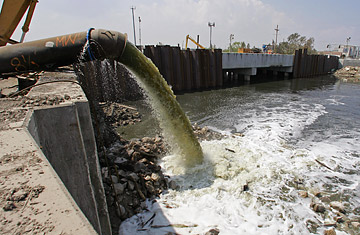
Water pumped into Lake Pontchartrain drains into the Gulf of Mexico
(8 of 9)
Some communities are leading the way in trying to preserve their shores and coastal waters. In March the legislature of Suffolk County on Long Island passed a law forbidding retail food establishments to use plastic grocery bags, food containers and wrappers beginning next year. Sixteen states have laws requiring that the plastic yokes used to hold six-packs of soda or beer together be photo- or biodegradable. Last December the U.S. became the 29th nation to ratify an amendment to the Marpol (for marine pollution) treaty, which prohibits ships and boats from disposing of plastics -- from fishing nets to garbage bags -- anywhere in the oceans. The pact goes into effect at the end of this year.
Compliance will not be easy. Merchant fleets dump at least 450,000 plastic containers overboard every day. The U.S. Navy, which accounts for four tons of plastic daily, has canceled a contract for 11 million plastic shopping bags, and is testing a shipboard trash compactor. It is also developing a waste processor that can melt plastics and turn them into bricks. The Navy's projected cost of meeting the treaty provision: at least $1 million a ship. Supporters of the Marpol treaty readily acknowledge that it will not totally eliminate plastic pollution. "If a guy goes out on deck late at night and throws a bag of trash overboard," says James Coe of NOAA's National Marine Fisheries Service in Seattle, "there's no way that anyone will catch him."
Stiff fines and even prison sentences may get the attention of landbound polluters. Under Administrator Mike Deland, the EPA's New England office has acquired a reputation for tough pursuit of violators. In November 1986 the agency filed criminal charges against a Providence boatbuilder for dumping PCBs into Narragansett Bay. The company was fined $600,000 and its owner $75,000; he was put on probation for five years.
Washington is one of the few states with a comprehensive cleanup program. Three years ago, the Puget Sound water-quality authority developed a master plan for cleaning up the heavily polluted, 3,200-sq.-mi. body of water. The state legislature has levied an 8 cents-a-pack surtax on cigarettes to help pay the bill; this year the tax will contribute an estimated $25 million to the cleanup. The Puget Sound authority and other state agencies closely monitor discharge of industrial waste and are working with companies on ways to reduce effluent.
An aggressive effort is being made to limit runoff as well. Two counties have passed ordinances that regulate the clearing of land and the installation and inspection of septic tanks. Farmers are now required to fence cattle away from streams. Zoning has become more stringent for construction in a critical watershed area: a single-family house requires at least two acres of land. The number of livestock and poultry per acre is also controlled.
The Puget Sound group has an educational program that teaches area residents everything from the history of the sound to what not to put down the kitchen sink. Controlling pollution is promoted as everyone's task. High school students take water samples, and island dwellers have been trained in what to do if they spot an oil spill. Says Seattle Water-Quality Planner Hubbard: "Bridgetenders are great at calling in with violations. They are up high, and when they see a black scum or a little slick, they let us know about it."