

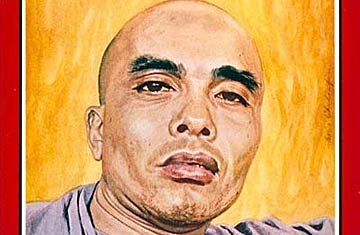
Thich Tri Quang
(8 of 9)
He seldom goes out. People come to him in a steady stream with reports, requests, gossip, rumors, intelligence. Clearly reveling in his game of political chess, he dispatches a Buddhist plenipotentiary to the resort city of Dalat, sends one of his attendant courier-monks with a message to the Vien Hoa Dao. Thich Tam Chau, secretary-general of the institute and nominally the senior monk in Viet Nam, comes by for lunch. Tam Chau, 44, once considered Tri Quang's rival, likes such creature comforts as his chauffeured Mercedes sedan. Tri Quang twits him about it, himself takes pedicabs about town. In and out is Thich Thien Minh, Tri Quang's former schoolmate who is now his first lieutenant and boss of the Bud dhist Youth, which provides the backbone of Tri Quang's demonstrations.
No sooner had last week's crisis been resolved than out to the 48 Buddhist chapters in the provinces went a cable: "Stop the struggle movement because the demands of the Buddhists of Viet Nam have been met by the authorities." Tri Quang, Tam Chau and Thien Minh all signed it. To the more militant chapter at Hué, a special message was sent: "Hold any action until the arrival of Thich Tri Quang." Then, hunkering down on the floor, Tri Quang personally reined in a delegation of monks pressing for more action. "We must honor our words," he said loftily, adding as a pragmatic postscript: "Otherwise we will all be dead."
Next the Catholics? For South Viet Nam and the U.S., Tri Quang's triumph may well produce a painful time of testing until elections are held sometime between July and September. For one thing, it is the time of the monsoons, the season for the enemy's annual offensive, when the weather protects him from airpower. U.S. firepower is more than adequate to blunt any major Red drive, but a Vietnamese army embroiled in political maneuvering is less than the best ally. Moreover, fully 50% of the army's officers are Catholic, and already the Catholics are restive over Ky's concessions to the Buddhists. If, in their drive for elections, the Buddhists gain too much favor or show too much fer vor, the Catholics could well come out fighting into the streets on their own.
Nor is the nation's loss of momentum all military. The whole decision-making process in the government, from pacification programs to much needed economic reforms, is slowly grinding to a halt. At first officials were simply mugwumping to see who came out on top—and which way to lean. Now, since Ky has promised to step down, they are out looking for new jobs. The crisis has badly shaken the cohesion of the generals' Directory, enhancing the chances of yet another military coup before the caretakers retire.