

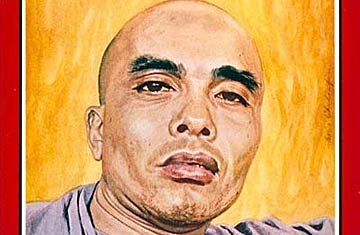
Thich Tri Quang
(2 of 9)
Perhaps the most important thing about Thich Tri Quang at this juncture in Vietnamese affairs is that he is a genuine political animal of the true native species. Unlike any of his rivals or predecessors in independent Viet Nam, he is untouched by Western tradition or training, proudly parochial, untainted by the embrace of the lycée mandarins. Fiercely nationalistic and xenophobic, he dreams of a return to the golden age of the Ly dynasty (1009-1225), composed of those ardent Buddhists who formed Viet Nam's first stable government and, by pushing out Chinese influence, created a Viet Nam for the Vietnamese.
Auspicious to Attack. South Viet Nam's Buddhists last week worked themselves into their most auspicious political position since the fall of Diem. Under Tri Quang's leadership, they wrested from Ky and the military government every concession that the angry street mobs had been demanding: elections for a constitution-making assembly by September at the latest, an amnesty for arrested rioters, the resignation of the present government as soon as elections take place. It hardly seemed to matter that it was a triumph more of timing than of substance. After all, it was Premier Ky who, in a speech last January, first proposed elections for a constituent assembly, though he had had in mind a date no earlier than 1967. And though Tri Quang's mobs artfully milked the mild anti-Americanism among some Vietnamese by hinting that the U.S. opposed elections, the U.S. in fact has always wanted them, provided that they were truly representative and not rigged by the Viet Cong in the countryside districts. Moreover, in Honolulu the U.S. had pledged itself to give as much help toward "nationhood" as any outsider could.
But to Tri Quang, timing is everything, and there were many reasons why he may have felt the time ripe to attack the government and force the election date to be advanced. The war was going extremely well, and before long the Ky government might have become entrenched beyond uprooting. More likely, he correctly judged that if the election process was lengthy, his opponents, notably the Catholics, would have time to get organized. As it stands, only the Buddhists can be ready for elections as early as September. In fact, Tri Quang has at his disposal the only organized political force in Viet Nam other than the Viet Cong.
Pitch & Tone. That force is one that he has largely hand-tooled himself, using it adroitly to control the pitch and tone of events ever since last March 10, when the Directory fired his friend and ally in the north of South Viet Nam, General Nguyen Chanh Thi, commander of the I Corps. Tri Quang had been looking for a pretext to move, and he found it in the dismissal of Thi, who was popular enough among Buddhists and his soldiers to provide an opening wedge of discontent. In a welling tide of violence, in which cars were burned, windows broken and the police and army baited, the Buddhist mobs forced the government toward capitulation.