

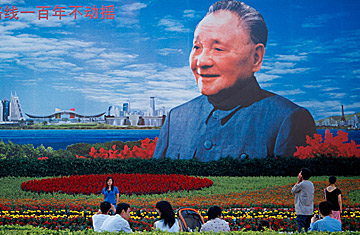
Tourists gather in front of the Deng Xiaoping poster in Shenzhen, China
(3 of 7)
Chinese capitalism was born in the rural farmlands when Deng permitted the provinces to dismantle their communes and collective farms. Peasants raced to divide up plots of land for private tilling, harvesting record crops and selling them in private markets. In no time, residents of tiny villages like Fenghuang in central Sichuan province had wrought a green revolution. By 1984 the village was producing more than $1 million worth of rice and a range of side products, including a famous brand of rice wine. The once impoverished residents were now earning close to $200 a year, enough to begin replacing their mud-and-straw huts with solid brick houses.
Economic liberalization spread through the land, sparking national growth that has averaged 10% a year for the past 18 years. Millions of Chinese go home each month with bulging wallets, accumulating private wealth in stocks, bonds and bank deposits that has jumped sixtyfold since 1980. The average per capita income last year stood at about $250, but people live far better than the number implies, since the prices of goods and services remain relatively low. The Chinese can buy cars, appliances, TVs, pagers, cell phones, computers--all the expensive gadgetry of advanced industrialism. Private enterprises have expanded to make up 13.5% of the economy, and joint ventures account for 38%; state-run production has dwindled to 48%.
China has not merely joined the world community but has become the globe's third largest economy. As the trend continues, local capitalists and foreign investors will corner more than a quarter of the country's production by 2000. China raked in nearly $40 billion in capital from abroad last year and lures more foreign investment than any other developing nation. The country is already a formidable force in international trade, an export powerhouse that ranks 11th in the world.
Economic progress has propelled once unthinkable social changes. The strict, monochromatic way of living has yielded to a stunning variety of colorful life-styles. Big Brother is no longer a pervasive presence. People are free to wear what they want, work where they want, live where they want, travel where they want. They enjoy vastly greater access to information of all sorts. They can choose whom to marry and when to divorce--though a couple may still have only one child. They may air their views, gripe and disagree with one another or the authorities--as long as they don't organize protests or insult top leaders.