

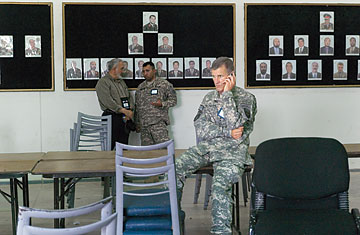
General Stanley McChrystal holds crisis talks on his phone at a local ANA (Afghan National Army) base.
(6 of 6)
Success is by no means assured. McChrystal's order to keep Afghan civilian casualties low, for example, may be politically savvy, but in the short term it can be militarily fraught. Before the Helmand offensive began, U.S. troops called in an air strike on a compound after coming under fire from it. A number of civilians died, and McChrystal was not pleased. "I want you all to stop dropping compounds," he quietly told the 100 members of his staff gathered inside his command center and others linked via video. "Yes, sir," responded the commander involved. Three days later, when troops in Helmand came under fire from such a compound, they followed his order. "We made the decision to isolate the compound and not destroy it," a Marine captain said, "because we couldn't confirm if civilians were inside."
The good news is that the compound wasn't bombed, no civilians were killed and no additional measure of poison was added to the bitter brew that has turned Afghans against the U.S. and its allies. The bad news is that the insurgents escaped from the compound before U.S. forces had a chance to secure it. The Marines call the need to tolerate the frustration of such incidents "tactical patience." Just how patient Americans and their Commander in Chief will turn out to be with Stan McChrystal's new way of fighting the Afghan war remains to be seen.