

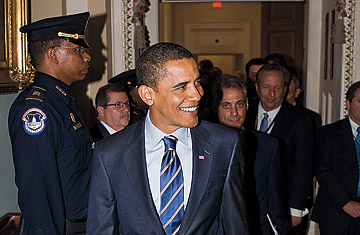
President-elect Barack Obama
(4 of 8)
It's not that speed and size aren't important. We're in a death spiral: businesses are shedding workers at a record pace, which saps consumer spending, which leads to more layoffs, and so on. The public sector needs to get an awful lot of unemployed workers and equipment back to work ASAP. As Christina Romer, an expert on the Depression who will chair Obama's Council of Economic Advisers, warns in a new YouTube video, we can't "let that vicious cycle go all the way to the nightmare scenario." In fact, many Keynesian liberals have been dismissing the Obama proposal as overly timid, and Obama has suggested it could grow.
But it's hard to spend a trillion dollars in a hurry if you don't want to buy stupid stuff. "We keep hearing we need to spend more. On what?" a transition aide asked. Obama's latest economic report predicted at least three more years of fairly high unemployment even if the stimulus succeeds, so speed can't be the only criterion. Democrat Jim Oberstar of Minnesota, chairman of the House Committee on Transportation and Infrastructure, has suggested that shovel-ready should apply to projects that can begin within a year, not just 90 days. This would give a real boost to mass transit; a two-year window would leave even more time to make thoughtful decisions. But if Congress decides that big and fast are all that matters, get ready for a legislative version of Brewster's Millions.
The prospect of a haphazard stimulus exploding the national debt is scary too--partly because we paid $450 billion in interest last year, rivaling what we spent on Medicare, and partly because our liabilities could crush us if foreign investors sour on Treasury bonds. That's why Obama's advisers want to focus on temporary initiatives that won't drown us in red ink by creating long-term obligations, which they call tails. It would be nice to give cash-strapped transit agencies enough money to reduce fares for a year, but what happens when the year is over? Similarly, some liberals have proposed temporary increases in Social Security benefits, but that kind of generosity tends to become permanent.
On the other hand, some initiatives have negative tails--spending money now saves it later. That's one reason Obama is so keen on energy efficiency; retrofitting 75% of federal buildings would curb emissions and set a powerful example as well as slash government energy costs for years to come. Obama also wants to invest in computerizing health records, which would cost tens of billions up front but could save hundreds of billions in government health costs. "At some point, we've got to start turning this around," says Democratic Congressman Ron Kind of Wisconsin, who wants the stimulus to create a new commission on U.S. liabilities. "We can't keep borrowing against our children's future."
But the most important stimulus principle will be change. Obama campaigned for it and won a mandate to pursue it. If he can make sure every initiative promotes his top priorities--reducing our dependence on fossil fuels, investing in our future competitiveness and rebalancing our economic playing field in a way Joe the Plumber would call spreading the wealth--the stimulus can succeed even if it fails to stimulate.
How to Get Smart
So where should the money go? And how can we make sure it gets there? In all three elements of Obama's plan, there is great promise as well as potential pitfalls.