

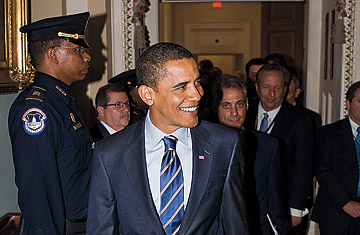
President-elect Barack Obama
(3 of 8)
Of course, bike lanes, electric buses and light-rail extensions are even more efficient than road repairs when it comes to fighting global warming, volatile gas prices and our addiction to foreign oil; transit projects also create 9% more jobs. Then again, transit projects like high-speed rail lines and subway stations tend to take more time to build than roads or repairs. And while a recent study calculated that the average dollar spent on infrastructure ricochets into $1.59 worth of short-term growth--a bit better than aid to states or broad-based tax cuts and a lot better than tax cuts for businesses or investors--increasing food-stamp or unemployment benefits packs even more bang for the buck.
The point is, specifics really matter. And when specifics get left to Congress and the states, they tend to get screwed up. Politicians love to cut ribbons for new roads; repairs don't have the same bringing-home-the-bacon oomph. Most state transportation departments have become virtual asphalt factories, and most states have laws preventing the use of federal transportation dollars for anything but roads. Yet Congress keeps writing the states blank checks, lavishing the most cash on the ones that do the most driving and paving, actually mandating that federal officials "shall in no way infringe on the sovereign rights of the states to determine which projects shall be federally financed." It's our money, their choices. The result is that Congress does a terrific job of spreading dollars around the country like peanut butter but a lousy job of identifying or promoting national priorities. "There's no performance measures, no environmental or economic analysis," says the Brookings Institution's Robert Puentes. "It's just about dividing up the spoils."
That's one reason our critical infrastructure is in such critical condition. It's crazy to pretend that all airports are equally deserving of renovation funds when New York City and Chicago have the worst bottlenecks. We shouldn't even think about new bridges in rural Alaska or rural anywhere when a quarter of our existing bridges are structurally deficient. Before Hurricane Katrina, the Army Corps of Engineers spent more money in Louisiana than in any other state--most of it on useless and destructive navigation projects with influential godfathers in Congress--but it never completed those levees around New Orleans. Now the stimulus could include forward-looking efforts to help rebuild the city's natural and man-made defenses--or more-of-the-same projects that would increase the risk of another expensive as well as tragic catastrophe. It will depend on who is calling the shots.
Obama cannot expect to handpick every item that ends up in the stimulus. Even the New Deal required a deal. But the New Deal was also new. And it's folly to expect the same dysfunctional spending habits that got us into this mess to get us out of it.
The Way Out