

(9 of 9)
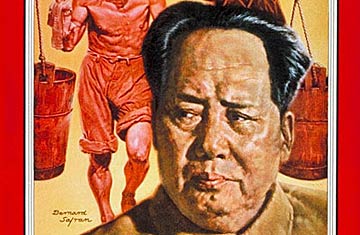
Diminishing Rice Bowl. The central fact about Mao's China today, however, is that the bogeyman that in varying degrees haunts both the U.S. and Russia is still largely a bogeyman. If Peking's current statistics are questionable, its basic economic assumptions are even more so. That cottage industry can ever play a major role in transforming China into a modern industrial state is doubtful. As Peking has begun to admit, many of the mud-brick blast furnaces are vastly wasteful of coal and are located too far from major industrial centers to be of much value. And the rosy agricultural future that Mao promises does not take into account the possibility of repeated bad harvests ("Weather no longer counts in China"), or the fact that there is presumably a finite limit to the amount of food a given area of ground can produce ("There are no low-yield crops, only low-yield thoughts").
Best guess of many Western specialists is that within a decade or so Red China will reach the day when its food supply is inadequate for its population, even by low Chinese diet standards. If the rice bowl grows much emptier, Mao's promises of a glittering future may cease to assuage his subjects.
The outburst of student rioting and anti-Communist statements that followed Mao's abortive "Hundred Flowers" attempt at liberalization last year (TIME, May 27 et seq.) was clear evidence that the regime had forfeited the enthusiasm of the intellectuals. Mao's response—to treat all intellectuals as suspect and force them into "remedial" manual labor by the hundreds of thousands—may produce obedience, but hardly provides the climate for intellectual creativity. The great, vast public, foreign observers report, seems more resigned to its lot, and even grateful for the orderliness that keeps warlords from swooping down on farmers to steal their harvests. But in a nation that has only a paper-thin economic surplus to invest in industrial growth, a loss of mass enthusiasm and a consequent drop in production could be no less deadly than active popular resistance.
At a diplomatic turnout in Peking a year ago, Mao peered up at a towering Briton and jovially remarked: "It's not that you are so tall. It is just that we, at the moment, are too short." That Mao has started China growing again is a fact of incalculable importance. If human beings can be reduced to mindless production-line cogs, Red China may one day achieve the stature for which its rulers yearn. But, so far. the crucial elements of Chinese Communist power are still supplied by Russia. It was not Chinese strength but the fear of Russian involvement that ultimately led the U.S. to deny itself the means to victory in Korea. The smattering of glittering modern factories in China is also courtesy of Russia. And as Mao Tse-tung himself said almost a decade ago, so long as China must rely economically on foreign countries it will not be truly independent, far less a great power.
—-An all-purpose title since Mao is simultaneously chairman of 1) the Central Committee of the Chinese Communist Party, 2) the Politburo oi the Chinese Communist Party, 3) the Central People's Government of the People's Republic of China, 4) the Council of National Defense.