

(6 of 9)
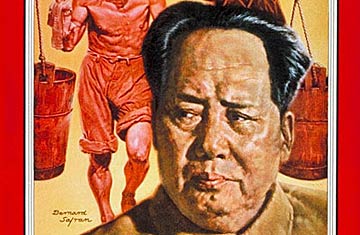
The Volunteers. To feed so many mouths, and to get work out of so many bodies, Mao decided on the ruthless and revolutionary device of the people's commune—a system of forced collectivization of human beings which the Russians abandoned as impractical in 1933. Rural people's communes, the first of which appeared in Honan province last April, sometimes have as many as 300,000 members, in most cases absorb the whole population of a county—peasants, traders, students, officials and professional men. Upon "volunteering" to join a commune, members turn over to it virtually all their private property, including homes, garden plots and heavy tools. Once in the commune, members cease to have a regular trade, become all-purpose production units. In Honan's pilot Sputnik Commune (which occupies an area two-thirds the size of Long Island), 43,000 members are divided into 27 "production corps" and 87 smaller "production battalions." At harvest time almost everyone is sent into the fields. In slack agricultural seasons or in their "spare time" they are put to dam building, construction of primitive factories, or industrial labor. All members of the commune get regular military training, and even when not on duty they must move by the numbers. At Chao Ying commune in Honan, according to an enthusiastic Red newsman, "assembly bells ring and whistles blow at daybreak. In about a quarter of an hour the peasants line up. At the command of company and squad leaders, the teams march to the fields, holding flags. One no longer sees peasants in groups of two or three smoking and going slowly and leisurely to the fields. The desultory living habits of thousands of years are gone forever."
Gone, too, is any notion of personal life or freedom of choice. Instead of a share of what they produce, commune members get wages fixed by a ruling committee of party activists. At Sputnik Commune, 260 mess halls have been set up where members are fed free rice. These communal kitchens, plus communal nurseries and "mending brigades," relieve the wives of members from "dull and trivial housework," transform women, too, into all-purpose laborers. (The sole concession made to femininity: pregnant women get a month off work with half pay.) Even the old folks, for whom the commune has established "Happy Homes," are kept busy with scheduled chores, such as feeding the chickens. And in at least one Kwangtung commune, when the inhabitants of the Happy Homes die, their bodies are dropped into a chemically treated pool and converted to fertilizer.