

(6 of 8)
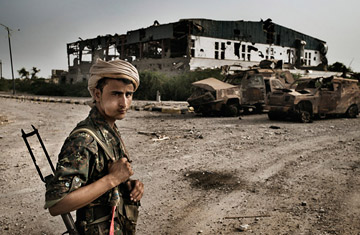
The rest of the leadership have scattered across the country, where they now represent a diffuse but still deadly threat. Al-Taheri's predecessor Salem Ali Qatan, the architect of the victory against AQAP, was killed shortly thereafter by a suicide bomber. The May 21 suicide attack on the military parade in Sana'a was followed by a July 11 bombing at a police academy that killed nine. There have been several smaller attacks in Abyan since then. But it's not quite business as usual for AQAP. U.S. and Yemeni intelligence suggests the jihadists are finding that the tribesmen who once protected them are now less hospitable. With Hadi focusing far more on AQAP than Saleh ever did, "the tribal sheiks know that sheltering these people carries a higher price than before," says Dahan, head of the Yemeni special forces. The ruins of Zinjibar are a cautionary tale for any community that shelters the jihadists, whether out of sympathy or under duress. It also takes the gloss off the prestige the AQAP leadership had gained from its defeat of the Soviet military in Afghanistan: it's hard to boast of your exploits in the Panjshir Valley when you've been soundly thrashed in your own backyard.
Endless Endgame
For all the blood spilled, though, Hadi's offensive may have been the easy part of the longer battle against AQAP. "It's not a purely military challenge anymore--it's much more complex," says al-Taheri. "The time of fighting with tanks is over." It will take significant coordination among Yemen's multiple military bodies, plus the help of foreign agencies like the CIA and Saudi intelligence, to track down and eliminate individual jihadist leaders.
Such cooperation doesn't come naturally to Yemeni forces, who have recently been more likely to shoot at one another. Even Yemenis find it hard to keep track of the loyalties of different military units. The elite Republican Guard and CSF are led by the son and nephew, respectively, of Saleh, the ousted dictator. The northwestern forces, including the powerful 1st Armored Division, are led by General Ali Mohsen al-Ahmar, once Saleh's closest ally before he threw his lot in with the protesters last year. Of more concern: al-Ahmar has long ties with the Yemeni mujahedin who fought in Afghanistan and was in charge of reintegrating them into society when they returned from their victory over the Soviet Union. Although President Hadi was able to get all three men to contribute to the Abyan campaign, their rivalry is far from settled. Hadi, with U.S. backing, is trying to reconfigure the armed forces under a central command and has had some success weakening the hold of the Salehs and al-Ahmar, but the old regime's loyalists continue to sporadically attack government forces and offices.