

(5 of 12)
The irony of Artie Samish is that his reign was made possible, in large part, by good-government laws passed a generation before--laws designed to weaken the established political parties. Samish and the lesser lobbyists of Sacramento stepped into the vacuum to supply the networks that weak parties could not. They built coalitions.
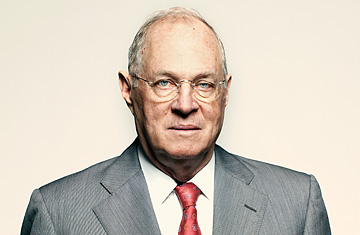
This was Bud Kennedy's stock in trade. He drank often and with relish, played a mean game of poker and spat tobacco juice from the window of the family car, "which drove his wife nuts," Hamlyn says. Gladys "Sis" McLeod Kennedy was "quite a gal" herself, says Hugh Evans, a law partner of Tony Kennedy's before his Supreme Court appointment. A Stanford graduate, Kennedy's mother was always ready to throw open the house for Bud's clients, which included, over the years, the liquor and tobacco industries as well as the association of manufacturers. A lot of business got done on the back patio over highballs, and as Didion puts it, Tony Kennedy grew up around a dinner table where everyone "laughed and argued and interrupted."
Bud supplemented his son's public-school training with an apprenticeship in political pragmatism. The youngest page eventually grew chummy with then governor--and future Chief Justice--Earl Warren. The boy absorbed the thousand little lessons that can be learned only inside city hall or a state legislature--not just how a bill becomes law, but why this bill and not that one. Meanwhile, his father began pulling him out of school to assist him at counsel's table in courtrooms across Northern California. Sometimes Bud worried that his precocious son was too dutiful and orderly, and once he offered the boy $100 if he would do something to get himself arrested. No dice. By the time he graduated from high school at the top of his class, Kennedy had 10 trials under his belt, and his friend the former governor was immortalized as the author of Brown v. Board of Education.
The Man from Land Park
America's booming 1960s were a great time for bright young men to dream big and write their own tickets. But for Tony Kennedy, the world of Sacramento seemed world enough. He followed the family path to Stanford, blazed through his undergraduate courses in three years, then heeded his father's advice to wait a year before enrolling at Harvard Law School. He spent a year in Europe at the London School of Economics. Within two years of earning his law degree, Kennedy was back home.
Bud had died suddenly, and with a certain inevitability, the son stepped into his shoes. He had married a Stanford-trained schoolteacher, as his father had done, and bought a house in Land Park just like Dad. He had his own two sons and a daughter, also like Bud, and took over his father's practice. With his falsetto laugh and penchant for quoting Shakespeare, the new Anthony Kennedy was a far cry from the tobacco-chewing version, but in other ways the DNA prevailed. His boyhood education was not wasted. Kennedy prospered as a lawyer and lobbyist.