

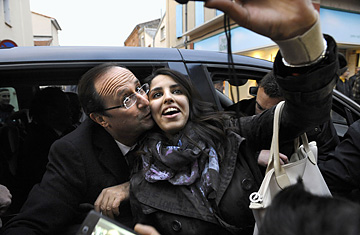
Francois Hollande, left, poses for a photograph with a fan during a public meeting at Place Jean Jaures
(5 of 5)
Could Greece really abandon the euro after all this? It's looking increasingly possible. In a May 7 research note, Citigroup analysts pegged the chances of a Greek euro exit at 50% to 75% over the next 12 to 18 months, largely because there's no viable government that looks willing to implement austerity measures required by Greece's creditors. If no ruling coalition is formed soon, there will be new elections next month, and political scientists say centrist parties may stand a better chance now that Greek voters have had the chance to vent their spleen. "In the next stage, they're going to vote with solutions in mind," says Featherstone.
Perhaps, although the evidence is mounting that European voters know the solutions needed to keep the euro going but simply don't like them very much. It's not just the worrying rise of far-right and far-left parties, which are united by an outright hostility to the idea of European political and fiscal unity; there appears to be a growing disconnect between public support for the euro and public support for the harsh measures being prescribed to save it. No one wants to endure the budget cuts and wage decreases, and any leader who tries to stand up for those sacrifices risks earning a ticket out of office. As long as that's the case, the European debt crisis will remain inescapable — and democracy will keep endangering the euro.
But if democracy can be messy, it has the benefit of letting leaders know exactly how their citizens feel and how much they're willing to bear. The anti-austerity wave that helped elect Hollande and pulverized the Greek government is the sort of political siren that can't be ignored. European voters are rejecting severe austerity not just because it's painful but also because it isn't working: borrowing costs remain high while economic prospects remain bleak for many of the euro zone's weaker economies. Hollande may not be a forceful personality, but he is in a unique position to jolt Merkel into permitting a glimmer of stimulus — and hope as well. "People need to see that while the collective effort may be long and difficult, it's going to be fair and involve everyone," Hollande told TIME. And if Europe's leaders can't do that, Europe's voters know what to do.