

(10 of 12)
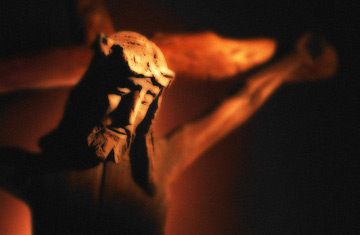
Even with the completion of the four canonical Gospels, Paul's interpretation of the Resurrection remains the fullest--in the silently cataclysmic event of Jesus' return to life, God the Father ratified and glorified the Son's chosen path and the redemptive agony to which Jesus had consented in his horrific death. Finally Paul asserts what seems, to many Christians and non-Christians alike, the hardest and truest test of all: "If Christ has not been raised, then our preaching is empty, and your faith is empty."
It is on such passionate belief that the existence of Christianity and its success as a world religion has depended. Without some such conviction, how else might a core of terrified cowards and brave women be so emboldened to spread the news of their teacher's salvation to a hostile world? There was no real money in it for them, no great power or glamour, only centuries of persecution. The still astonishing fact is that they believed their teacher had died and then returned, not in a vision but in a credible body, to urge them outward. What more has any person ever known about him?
And the fact remains that the substance of Jesus' teaching is the basis on which many Christians establish their faith. Its piercing good sense, imaginative eloquence, the breathtaking stringency of his ethical demands and his simultaneous patience and compassion are crucial to the intimacy that so many establish with this long gone man. The promises he makes in the Gospel of John, in the resonant (and quite literal) King James translation, have strengthened endangered men and women from the terrors of Roman martyrdom till today--"Let not your heart be troubled: ye believe in God, believe also in me. In my Father's house are many mansions: if it were not so, I would have told you. I go to prepare a place for you...that where I am, there ye may be also."
At heart, the ethical teachings of Jesus are not markedly different from those of the earlier Jewish prophets, above all Isaiah. Jesus' emphasis on acceptance and mercy is especially strong, even to the point of demanding that his followers not resist evil. He insists that the unrepentant outlaws of the world will enter the reign of God before the righteous. Yet he demands that his hearers be "perfect even as your Father in Heaven is perfect." His sense of the imminence of God's reign, and the change of heart it demands, is expressed in earlier Hebrew scripture, but only Jesus expects to administer the reign.
Whatever Jesus' final expectation, that reign did not arrive in his lifetime or in the lives of his earliest companions. Yet a majority of his followers continue to expect it. In the face of so long an uncertainty, how has his following not only endured but grown so hugely through two millenniums? And what can be expected of his long potent holding power over human imagination and hope in the near and distant future? If benign Christian institutions and the capacity to believe in a God who loves his creation should weaken fatally, if the artistic inspiration of the figure of Jesus should wane--as it has in some of the West today--are the existential promises of his teaching sufficient to maintain a world faith? What else has he to offer a ferociously diverse but rapidly shrinking planet?