

(5 of 11)
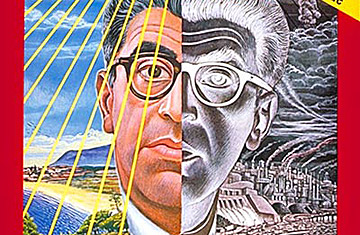
The result of massive production is massive filth. Every year, Americans junk seven million cars, 100 million tires, 20 million tons of paper, 28 billion bottles and 48 billion cans. Just to collect the garbage costs $2.8 billion a year. The U.S. also produces almost 50% of the world's industrial pollution. Every year, U.S. plants discard 165 million tons of solid waste and gush 172 million tons of smoke and fumes into the air. Moreover, chemicals have replaced manure as fertilizers, while vast cattle feedlots have moved closer to cities. Result: animal wastes now pollute drinking water and pose a sanitation problem equivalent to that of almost a billion people.
The truth is that Americans have done far too little to tame the polluting effects of technology. Even the far reaches of Puget Sound are burdened with pulp-mill discharges. Mining companies spew so many wastes over tiny East Helena, Mont. (pop. 1,490) that the lettuce there contains 120 times the maximum concentrations of lead allowed in food for interstate shipment. Tourists are beginning to leave Appalachia nowadays; poisonous acid from strip mines has seeped into the water table.
The nation's 83 million cars cause 60% of the air pollution in cities. Fully aware of the pressure to reform, Detroit will introduce 1971 models that exhale only 37% as much carbon monoxide as did 1960 models. To achieve this, however, requires increased engine heat, which in turn will increase the nitrogen oxide emissions. And nitrogen oxides are particularly dangerous: under sunlight, they react with waste hydrocarbons from gasoline to form PAN (per-oxyacl nitrate), along with ozone the most toxic element in smog.
"We now have 50% more nitrogen oxides in the air in California," says Ecologist Kenneth E.M.F. Watt. "This has a direct bearing on the quality of light hitting the surface of the earth. At the present rate of nitrogen buildup, it's only a matter of time before light will be filtered out of the atmosphere and none of our land will be usable." Tougher auto-emission standards in California will start reducing the nitrogen problem next year. But Watt argues that California's air pollution is already so bad that it may start a wave of mass deaths by 1975—perhaps beginning in Long Beach. He also blames pollutants for the rising number of deaths from emphysema in Southern California. Trouble may well loom for Los Angeles, which sits in a smoggy bowl that often contains only 300 ft. of air. Almost every other day, the city's public schools forbid children to exercise lest they breathe too deeply.
California is a blessed state—young, aggressive, progressive. And yet it is rapidly losing many of its best natural qualities through heedless exploitation of its resources. Among its problems: OPEN SPACE. Every year, Greater Los Angeles' growth consumes 70 sq. mi. of open land. Not only is prime farm land taken out of production, but it is also developed