

(4 of 11)
Davy Crockett Goes to Jail
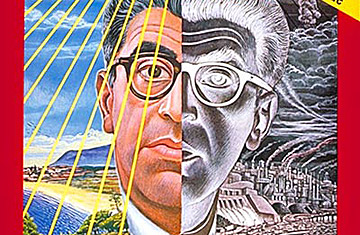
Ecologist LaMont Cole raises the crowding problem. Since 80% of the population is likely to live in cities occupying only 2% of the land, the sheer density of people will strain what might be called the urban ecosystem. Asks Cole: "Are we selecting for genetic types only those who can satisfy their aesthetic needs in congested cities? Are the Davy Crocketts and Kit Carsons who are born today being destined for asylums, jails or suicide?"
Barry Commoner believes that under present conditions the earth can hold between 6 billion and 8 billion people. After that, environmental and food-supply problems may become insurmountable. Commoner notes that humans tend to view the procreation of several children as a kind of guarantee of immortality. "What makes human populations turn off?" he asks. "If a father knows that his sons will survive, perhaps he will not feel the need for so many successors." But Commoner's principle that greater material security might stop population growth requires a dramatic rise in the world standard of living—hardly a bright prospect. Moreover, ecologists are not hopeful that a "green revolution" can increase farm harvests enough to feed twice as many people. "Undeveloped countries cannot afford to mechanize their farming production," argues Eugene P. Odum. "The fancier a seed we give them, the more artificial care it needs, along with tractors and gasoline."
Modern technology is already pressuring nature with tens of thousands of synthetic substances, many of which almost totally resist decay—thus poisoning man's fellow creatures, to say nothing of himself. The burden includes smog fumes, aluminum cans that do not rust, inorganic plastics that may last for decades, floating oil that can change the thermal reflectivity of oceans, and radioactive wastes whose toxicity lingers for literally hundreds of years. The earth has its own waste-disposal system, but it has limits. The winds that ventilate earth are only six miles high; toxic garbage can kill the tiny organisms that normally clean rivers.
Massive Filth
In a biospheric sense, the U.S. bears a heavy responsibility. According to Paul Ehrlich, "Each American child is 50 times more of a burden on the environment than each Indian child." Although the U.S. contains only 5.7% of the world's population, it consumes 40% of the