

(3 of 11)
To maintain balance, all ecosystems require four basic elements: 1) inorganic substances (gases, minerals, compounds); 2) "producer" plants, which convert the substances into food; 3) animal "consumers," which use the food; and 4) "decomposers" (bacteria and fungi), which turn dead protoplasm into usable substances for the producers. As the key producers, green plants alone have the power to harness the sun's energy and combine it with elements from air, water and rocks into living tissue—the vegetation that sustains animals, which in turn add their wastes and corpses to natural decay. It is nature's efficient reuse of the decay that builds productive topsoil. Yet such is the delicacy of the process that it takes 500 years to create one inch of good topsoil.
The process is governed by distinct laws of life and balance. One is adaptation: each species finds a precise niche in the ecosystem that supplies it with food and shelter. At the same time, all animals have the defensive power to multiply faster than their own death rates. As a result, predators are required to hold the population within the limits of its food supply. The wolf that devours the deer is a blessing to the community, if not to the individual deer. Still another law is the necessity of diversity. The more different species there are in an area, the less chance that any single type of animal or plant will proliferate and dominate the community. Even the rarest, oddest species can thus be vital to life. Variety is nature's grand tactic of survival.
The Domino Theory Applied
Man has violated these laws—and endangered nature as well as himself. When a primitive community ran out of food, it had to move on or perish. It could harm only its own immediate environment. But a modern community can destroy its land and still import food, thus possibly destroying ever more distant land without knowing or caring. Technological man is so aware of his strength that he is unaware of his weakness—the fact that his pressure upon nature may provoke revenge.
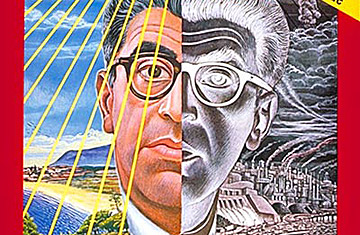
By adding just one alien component to a delicate balance, man sometimes triggers a series of dangerous changes. Nature immediately tries to restore the balance—and often overreacts. When farmers wipe out one pest with powerful chemicals, they may soon find their crops afflicted with six pests that are resistant to the chemicals. Worse, the impact of a pesticide like DDT can be vastly magnified in food chains. Thus DDT kills insect-eating birds that normally control the pests that now destroy the farmers' crops. The "domino theory" is clearly applicable to the environment.
In South Africa, for example, a campaign was waged against hippopotamuses. Deemed useless beasts that merely cluttered up rivers, they were shot on sight. Result: the debilitating disease called schistosomiasis has become as great a public-health hazard in certain areas as malaria was 50 years ago. As usual, the missing links in the chain of events were discovered the hard way. It turns out that hippos keep river silt in