

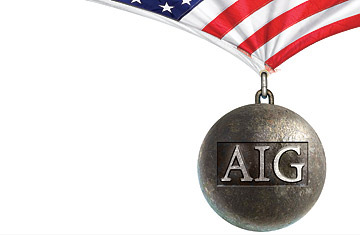
AIG photo-illustration
(7 of 7)
But Geithner, who was overseeing the AIG rescue effort with the Federal Reserve, says he had no idea until March 10 that more bonuses were in the pipeline for AIG FP. The President found out two days later, igniting an internal firestorm of White House indignation as officials scrambled to stem the public-relations damage. And now both the White House and Congress are determined to limit the pay packets of executives of any company that is getting TARP money or other government assistance.
There are proposals in Congress to reverse some of the bonuses through legislation, and Liddy called on executives to spit back half their bonus. Some have done so. The program for 2009 has already been pared. That my placate, for now, Main Street constituents who want to get back at those overpaid Wall Street types.
But, considering the risks still infecting the system, the clawback is pointless. Geithner and Bernanke have way more important things on their plate. Did we mention the economy, with unemployment headed toward 10%? And the upcoming G-20 meeting that has the U.S. and Europe at odds over what to do first--regulate the global economy or stimulate it? Nor will the albatross of AIG be removed from the government's neck anytime soon. Liddy said his goal is to restructure AIG's core businesses into "clearly separate, independent" companies that are "worthy of investor confidence." AIG has "made meaningful progress," but the company is still at the mercy of the economy. In the businesses it wants to keep, like commercial insurance, competitors sense an opportunity to grab market share. For the assets it wants to sell, there are few buyers. What remains is still a huge, vulnerable company.
Lastly, the Obama Administration will need perhaps $750 billion in new funding merely to stabilize U.S. banks, which it hopes will be enough to ease the credit markets, stimulate lending and get the economy moving again. There's no telling what kind of political wrangling will happen over that, but one thing seems certain: if you are an executive of a bank that gets federal money, it wouldn't be a smart idea to count on a bonus.