

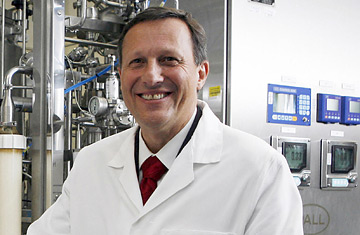
Novartis chairman Daniel Vasella
(6 of 7)
Vasella has also revamped Novartis' marketing force in the U.S., where it long lagged behind competitors. He poached Paulo Costa from Johnson & Johnson in 1999 and made him CEO of Novartis' U.S. drug unit. Since then, Costa's sales force has grown to 5,800 from 2,815. The payoff? Drug sales in the U.S. grew 24% last year.
That expansion was partly in preparation for the launch of a potential blockbuster drug called Zelnorm, aimed at irritable bowel syndrome, for which there are few treatments. But the FDA, expressing concern about Zelnorm's side effects, rejected the application, asking for more data. In the short term, says Morgan Stanley analyst Duncan Moore, Novartis' prospects for robust growth depend heavily on the FDA's reversing its ruling on Zelnorm and approving an anti-inflammatory drug named Prexige, which Novartis plans to submit to the agency toward the end of this year.
It has been a long day on the 11th floor of the Swiss Center on Fifth Avenue in New York City. Novartis' board of directors has listened to presentations on CIBA Vision's competitive challenges, purchasing and Gerber. Vasella slumps back comfortably in his chair, asking crisp questions. He's the picture of Swiss cool--until he learns that a New York City attorney is "assessing the claims of 300 to 400 possible plaintiffs" who say Novartis' athlete's-foot medicine Lamisil caused them injury. "This is outrageous!" he cries. "It has absolutely nothing to do with right or wrong, just with making money."
That, of course, is exactly what critics say about the drug industry today. Nevada has sued a dozen drug companies for hiking the average wholesale prices (AWP), which the U.S. government uses to determine what it pays for drugs, and using the extra money to pay commissions to doctors who prescribe their products. Activists and state attorneys general say the AWP, set by the companies, rarely reflects the prices charged to HMOs and other drug wholesalers. "What we say is that AWP stands for 'ain't what's paid,'" says Ahaviah Glaser, director of the Prescription Access Litigation Project.
Vasella, acutely aware that his industry is losing the p.r. battle, believes that proactive concessions will help avert legislative action. Novartis donates antileprosy drugs to India, sells antimalaria drugs at cost to the World Health Organization and has established a research center in Singapore to develop treatments for Third World diseases like tuberculosis, whose sufferers can't pay much. (He is not alone in this. Merck has set up anti-AIDS programs in Botswana, and Aventis is helping tackle AIDS in South Africa.) Eight drug companies, including Novartis, have announced a drug-discount program in the U.S. that they say will save qualified patients 20% to 40% on their prescriptions. But Ron Pollack, director of Families USA, says such measures are just p.r. ploys. A discount on what price? he asks. Because the initial AWP is fictitious and prices are climbing rapidly, "this discount is absolutely misleading."