

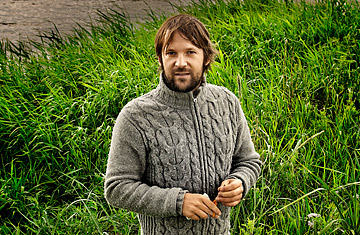
Back to basics. Redzepi forages for produce on the Dragor Coast outside Copenhagen for his restaurant Noma
(4 of 4)
Capel took his cues from a Danish newspaper, Politiken, that had published its own scathing critique in 2011. Graduate student Ulla Holm charged Redzepi and Meyer with nothing short of culinary fascism, observing, "It is hardly coincidental that, when last I visited Noma, the waiters were dressed in brown shirts." In conversation, Holm says she's eaten at Noma several times and enjoys the food. But, she adds, "there are some disturbing similarities between fascist ideology and the new Nordic cuisine. There's an emphasis on elements that have remained uncontaminated by outsiders. There's an obsession with purity."
For the record, Redzepi notes that he has nothing against olive oil and cooks with it at home. If he doesn't use it at Noma, it's not, he says, because "we're trying to be a proud nation and exclude everyone else. It's because we're trying to use the restaurant to develop a cuisine where one didn't exist. If I lived in Italy and were working only with local products, no one would think anything of it."
Still, the jabs upset him. This is the flip side of all those reservation requests and invitations to speak at venues all over the world: being positioned at No. 1 also makes him the No. 1 target. In a world still uncomfortable with its fetishization of chefs, he is learning that he will be criticized for his ambition and for doing anything that isn't "just" cooking.
So he is proceeding cautiously. Thus far he has turned down the inevitable offers to host television shows and open more restaurants. His efforts at influencing a broader public have been confined to writing a couple of op-eds in foreign newspapers and organizing an event called MAD Foodcamp (mad means food in Danish) that brings together chefs, scientists and policymakers to talk about the future of food. The attention is still new enough that he mostly enjoys it, but he knows it won't be long before the culinary world demands its next big thing. "I think of fame as a loan," he says. "Don't get attached to it, because you have to give it back."
He confesses to not having a plan — or even a role model — for what he'd like to be doing when he's 40 or 50. So he focuses on the thing that brings him the most satisfaction. Whether scrambling over a hillside in search of wild ginger at a recent chefs' gathering in Japan or trying to create the perfect blood sausage late at night in his test kitchen, he is visibly happiest when deepening the connection between nature, culture and the plate. Which is why, not incidentally, he is so pleased by those ants. "They have a completely exotic flavor, very floral," he says, pausing to pop one into his mouth. "You'll see. One day every fine-dining restaurant will be serving them."