

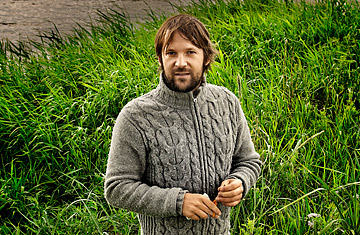
Back to basics. Redzepi forages for produce on the Dragor Coast outside Copenhagen for his restaurant Noma
(2 of 4)
Redzepi is a notorious perfectionist (he briefly scandalized his constitutionally placid countrymen after a television documentary exposed some of his more colorful kitchen outbursts), but he wasn't always so exacting. Born to a Danish mother who worked as a cafeteria cashier and a Macedonian father who emigrated to Copenhagen and worked as a taxi driver, Redzepi flunked out of high school. He chose to attend cooking school only because a buddy had done the same. Once enrolled, he did well enough — he took second place in a school contest for a dish based on the chicken in cashew sauce that his dad used to prepare in a wood-fired oven — but it hardly felt like fate.
The eureka moment would come later. After completing apprenticeships in France, Spain and the U.S., Redzepi was approached by Danish television chef Claus Meyer. About to open a restaurant in an old whaling warehouse, Meyer planned to serve truly Danish food, banning the foie gras and truffles — the imported French ingredients, in other words — that passed for haute cuisine in Denmark. And although Redzepi was cooking at a Copenhagen restaurant whose menu wouldn't seem out of place in Paris, Meyer saw something in Redzepi that convinced him he was the man for the job. "René had the most humble and curious attitude," recalls Meyer. "He was ready to give up his past ideas and education and go into new territory without any prejudices."
As a showplace for their new Nordic cuisine, Noma served only foods produced within the region. Initially, Redzepi focused on finding local substitutes — vinegar for citrus; musk ox for beef — for the pillars of French cuisine. "We would make crème brûlée with good Danish cream and wild Danish berries," he recalls. "But it was still crème brûlée." It wasn't until a burly forager showed up at Noma's back door with a handful of wild plants in 2004 that Redzepi's sense of possibilities expanded. The chef began leading his cooks on foraging trips. And as seaweed and birch sap made their way onto Noma's menu, Redzepi's philosophy became more refined. "I wanted to learn how to integrate these ingredients so that we were cooking a part of our culture," he says. "I wanted you to taste the soil."
These days, tasting the soil at Noma can be a near literal experience: dinner often starts with a flowerpot stuffed with tiny carrots and radishes "growing" in a stratum of charred ground hazelnuts. But most of Redzepi's other dishes convey that sense of terroir more metaphorically. As hay-smoked quail eggs give way to sweet, translucent laminates of dried scallop, the flavors — earthy, acidic, briny — seem a map to a marvelous new world. For those accustomed to the vocabulary of European and American fine dining, a first meal at Noma is a revelation. "All the flavors were so new and exciting," recalls Barcelona chef Jordi Artal. "I called my sister from the dining room and said, 'You have got to come here right away.' "