

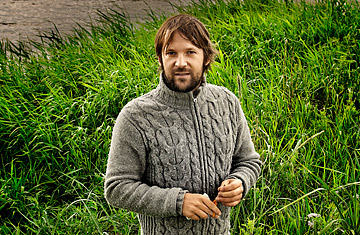
Back to basics. Redzepi forages for produce on the Dragor Coast outside Copenhagen for his restaurant Noma
(3 of 4)
Provoking that excitement is exactly what drives Redzepi. "For so long, we Danes didn't have a cuisine," he says. "We're Protestants, so food was just about sustenance, never pleasure. You'd eat your meat and potatoes in silence and go back to work." The extent to which he's succeeded in enlivening Danish culture is evident all over Copenhagen, with its burgeoning cadres of exciting young chefs. "When he started, we were all thinking, Is there really anything to eat here?" says Culture Minister Uffe Elbaek. "But Ren has helped elevate food to the same level as fashion, and it's affected our whole identity. He's telling a new story about what it means to be Danish."
It's not only Danes who have felt the Redzepi effect. Foraging is one of the biggest restaurant trends these days. More broadly, Redzepi has forged a path for chefs who want to innovate without necessarily indulging in the technological wizardry of molecular gastronomy. By trying to convey a sense of place in their cooking, chefs from Sweden to South Carolina have found that the limitations of geography can be a spur to creativity.
All this has been thrilling for Redzepi but stressful. Having reached the top in just a few years, he is under tremendous pressure to stay there, which is partly why he spends so much time creating new dishes. Two members of his staff devote themselves solely to developing recipes in Noma's sleek test kitchen, and anchored on a renovated boat just outside the restaurant is the Nordic Food Lab, where research director Lars Williams experiments with new products under Redzepi's supervision. One recent afternoon, Williams opened a jar of fermenting yellow peas — which he has inoculated with local microbes to create a Nordic miso — for Redzepi to taste. "We've gotten to the point where we've discovered most of the products in the woods and sea that we can use," the chef said, nodding his approval to Williams. "There aren't going to be that many new discoveries. So we have to come up with new ways of using the things we have."
He learned the habit of constant innovation from his apprenticeship at Adrià's El Bulli, and he maintains a friendly relationship with his former mentor. But all the world loves an oedipal story, and many in the food media have tried to cast Redzepi's rise as a tale of the nature-loving, terroir-based son overthrowing the hydrocolloid-obsessed, mad-scientist father. Certainly the Spanish press, which not long ago was busy crowing about its usurpation of French cuisine, has reacted with skepticism and even outright hostility to the age of new Nordic. Recently, José Carlos Capel, chief restaurant critic for the newspaper El País, wrote a column in which he referred to Redzepi's insistence on serving only regional products as "demagoguery" and asked, "Is Redzepi leading the extreme right of European cuisine, something akin to a gastronomic Tea Party?"