

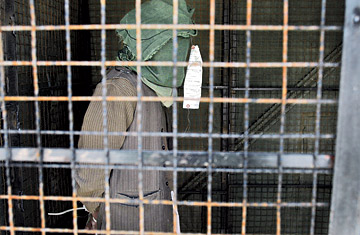
An elderly Afghan man detained in Ghazni, a former Taliban stronghold, by the U.S. Army in 2004.
(3 of 3)
No one knows how many suspected terrorists have been grabbed by the agency over the past eight years. Already, the CIA has transferred at least 14 detainees from secret prisons to Guantánamo. Dozens or even hundreds of others may still be imprisoned at secret CIA facilities around the world. As many as 20 may have been victims of mistaken identity, a study by the European Parliament found. As part of a broader pledge to end torture, Obama has vowed to halt the practice of rendition. But whether Obama plans to abandon the offshore facilities where interrogations have taken place remains unclear. If he does, any detainees remaining there would probably need to be relocated--possibly to Guantánamo, where their legal status would be examined anew.
Eavesdropping
Obama may leave intact, at least at the outset, one of the most controversial elements of Bush's war on terrorism: a secret snooping program that spies on some Americans without benefit of a court order. Shortly after 9/11, the National Security Agency began intercepting communications to and from the U.S. by suspected terrorists and confederates in their network. The White House alerted key members of Congress about the program, in part because the Administration was skipping the long-standing practice of obtaining judicial approval in advance for surveillance, as prescribed by a 1974 law. When the program became public in 2005, Justice Department officials struggled to structure it to adhere more closely to existing law, but how much it was actually changed remains unclear. Not all civil libertarians were satisfied, and Obama vowed during the campaign to end warrantless wiretapping. But he is unlikely to halt the program outright; instead, he will probably ask a team of legal advisers to recommend a new approach.
Even after all these policies are modified or abandoned, Obama will face lingering questions about whether anyone should be punished for Bush-era excesses. The feds are now probing whether CIA officials knowingly destroyed tapes of illegal interrogations in 2005, and officials at Justice are looking into whether the department's lawyers acted appropriately when they wrote legal opinions that approved waterboarding and other unconventional interrogation methods. A similar Justice Department review of attorney behavior regarding the domestic surveillance program is also under way.
Lawmakers from both parties have called for accountability in all these programs, but neither Obama nor top congressional Democrats have signaled much appetite for prosecuting Bush Administration figures once they are out of office. An incoming President will need every vote he can get on economic and energy matters, and is unlikely to spend political capital on a divisive effort to assess blame for the missteps of a previous Administration. But civil rights proponents say a full review may be the only way to ensure that such government abuses do not happen again. Vincent Warren, executive director of the Center for Constitutional Rights, says, "Criminal prosecution of some of the people involved does have a restorative aspect, and not just symbolically." Obama will probably cooperate with congressional probes of Bush-era behavior. But he may find it trickier politically to go after officials who were, most likely, just following orders.