

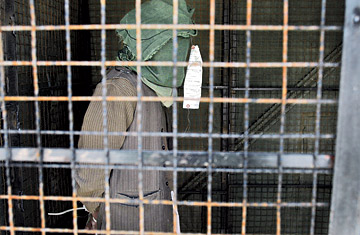
An elderly Afghan man detained in Ghazni, a former Taliban stronghold, by the U.S. Army in 2004.
It wasn't so long ago that Barack Obama saw paths around many of the civil-liberty dilemmas that President Bush faced when he launched a war on al-Qaeda around the world. The freshman Senator from Illinois believed, and often claimed, that the White House could and should have avoided the shame of Guantánamo Bay, resisted the urge to engage in torture and shunned domestic eavesdropping.
Such easy exits may be harder to come by now that Obama is preparing to take over as Commander in Chief. Over the past eight years, the Bush Administration has erected a new array of military detention camps, interrogation methods and spy programs of questionable legality. During the presidential campaign, Obama promised to dismantle much of that apparatus, arguing that the Bush Administration's walk on the dark side had eroded freedoms at home and damaged America's reputation abroad. But doing so will take more time and prove more complicated than some of his supporters may realize.
In some ways, it makes political sense to go slowly. Ever since 9/11, Obama's party has been squeamish about walking point on civil liberties out of fear that Republicans would wrap such a move around their necks at election time. And so, though civil libertarians may holler, the Obama team is likely to put the emphasis on national security as it begins to explore options for undoing the policies of the Bush-Cheney era. Here's a look at what the new President may seek to change and what he may leave in place:
Torture
Once he is sworn in, Obama could simply order a government-wide halt to waterboarding and any other questionable interrogation techniques that have been judged legal during the past eight years. The Executive Order would have to be sweeping and reach deep into the government's darker recesses. That's because the Bush team has written so many legal memos okaying various techniques for interrogators working at a wide range of agencies. Some of those opinions have been disclosed publicly, but an unknown number remain classified. Obama will need to direct his Attorney General to issue new legal guidance that supersedes all those legal opinions, seen or unseen, if he hopes to prevent a return to such practices in the future. Former federal prosecutor and onetime trial judge Eric Holder, Obama's pick to lead the effort as the top man in the Justice Department, earned a reputation as a relatively moderate legal thinker when serving there as a senior official in the Clinton Administration. That concerns some civil libertarians. "If you leave these on the books, you leave a bunch of loaded guns that future Presidents and agency heads can pull out and shoot when they want to," says Anthony Romero, executive director of the American Civil Liberties Union.
Guantánamo