

(3 of 4)
Wonk-driven policies sometimes translate into daft politics, as with Obama's Making Work Pay tax rebates for 95% of U.S. workers. Bush had sent out similar rebates through fat checks, but Obama's economists persuaded him that it would be better stimulus to dribble out his tax cuts a few dollars a week through reduced withholding because studies suggest we're more likely to spend a windfall when we don't notice it. But politics is about getting things noticed. Emanuel protested that "we're denying ourselves an Ed McMahon moment," the squeal of Publishers Clearing House pleasure that would greet an envelope from Obama. Ultimately, less than 10% of Americans realized that Obama had cut their taxes. As Klain put it, "The political theory was, if you do the right thing and you get results, that's good politics ... In retrospect, it just seems stupid."
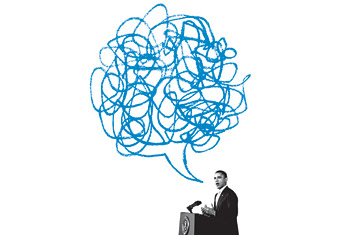
While the President has admitted that he didn't pay enough attention to messaging, that wasn't the whole problem. His message was also muddled. "We just couldn't get our story straight," one senior Obama aide recalls.
A DEEDS GUY, NOT A WORDS GUY
That story was about saving the economy at the time but also transforming the economy for the future, tax cuts but also spending, stimulus today and fiscal rectitude tomorrow. The Republican story was simpler: No. And Democrats focused on their own complaints about the stimulus--too small, too many tax cuts, etc.--which helped reinforce the GOP message that the law was a mess. Even Obama kept saying it wasn't perfect. And after two years of campaigning, his marketing team was off its game. "We were all so emotionally and physically exhausted," recalls Dan Pfeiffer, Obama's communications director. "You run a marathon, you feel like a total zombie, and then you have to do an all-out 800-yard sprint ... The phone starts ringing and you don't know where the bathroom is and, oh, by the way, the market might drop 3,000 points if the Recovery Act doesn't pass. You're not having the strategic discussions you'd have if there was time to think."
Inside the White House, Axelrod favored a pessimistic message, emphasizing the long road ahead to lower expectations. But Summers urged Obama to accentuate the positive to boost consumer and business confidence. So the President did both. Meanwhile, Emanuel wanted Obama to talk about jobs, jobs, jobs so Americans would see he was focused on reviving the economy. But Vice President Joe Biden thought "numbering jobs" was a fruitless message during a free fall and pushed for broader themes about transforming the economy. Again, the President did both.
Ultimately, the stimulus drove all kinds of change. It doubled production of wind and solar power, jump-started a smart grid and created a domestic battery industry for electric vehicles. It began dragging our pen-and-paper health care system into the digital era and modernized the New Deal--era unemployment-insurance system. But it didn't change the way politics is practiced in Washington, including the pettiness and nastiness that Obama had promised to transcend. With Republicans refusing to cooperate during an emergency, Obama didn't try to reinvent Beltway culture; he focused instead on rounding up 60 votes in the Senate, serving notice that after campaigning as a change-the-system outsider, he would govern as a work-the-system insider.