

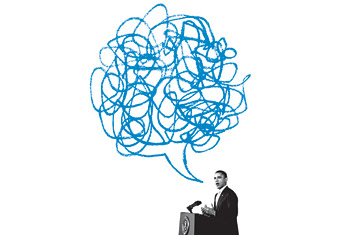
Two weeks into his presidency, Barack Obama was already losing control of his narrative. Before he took office, the public supported his economic recovery plan, 64% to 19%; now the public opposed it, 52% to 38%. Republicans who embraced stimulus under President Bush were shredding Obama's stimulus as socialism. Somehow, they had steered the debate toward sod on the Mall, condoms and other spending Obama had stripped from the stimulus, plus Mob museums, levitating trains to Disneyland and other nonsense that was never in the bill. The new President had a reputation as a great communicator, but he was clearly failing to communicate.
On Feb. 3, 2009, he summoned the anchors from all five major television networks to the Oval Office for one-on-one interviews. This would be his chance to pitch his plan to the people, to explain how the stimulus would create 3 million jobs in the short run while advancing his priorities in energy, health care, education and the economy for the long run. But that morning, his nominee for Secretary of Health and Human Services, Washington power broker Tom Daschle, withdrew because of unpaid taxes. So the interviews were all about the botched nomination. "That was a key moment," Obama's then legislative director, Phil Schiliro, says. "He didn't get to rebut all the false information out there." The big news that day was Obama's take on the Daschle snafu: "I screwed up."
Three and a half years later, there's a sense even among Democrats--especially among Democrats--that Obama has screwed up his message. He's done big things. He's made big progress on his 2008 campaign policy agenda. But there's a widespread feeling that the change he promised on the trail never happened once he got to Washington, and his supporters tend to blame his salesmanship.
The much mocked stimulus is the best example of the problems Obama has marketing his achievements. The top economic forecasters agree that it helped prevent a depression and end a recession, but a year after he signed the bill, the percentage of Americans who believed it created jobs was lower than the percentage who believed Elvis was alive. The stimulus was also a delivery device for Obama's agenda of change. It invested $90 billion in clean energy when the U.S. had been spending only a few billion a year; it launched Race to the Top, a landmark education-reform program; and it included the biggest infrastructure push since Eisenhower's, the biggest middle-class tax cuts since Reagan's and the biggest new research investments ever. But hardly anyone knows any of that.
Why not?
THE GIFT BAG