

(3 of 10)
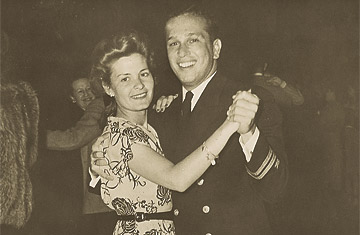
Dad's ability to provide for everyone began with an incredible piece of luck in 1942: he won the largest daily double in the history of the Suffolk Downs race track: $1,877.40. "Ensign Klien [sic] says he will use his winnings to purchase war bonds," the Boston Record reported. After the war, he used the money to buy a small printing company. By the time I joined the payroll at the age of 14, the company had grown to nearly 100 employees and was doing some of the finest lithography in New York.
I was extremely proud of my dad. I could see how his employees respected him. But they feared him too, and so did I. He had made an implicit deal with my mom: she was allowed to have her sisters live with us, and he was allowed to go about screaming like a banshee. He and Mom had a loving marriage, and they had fun. I have in my possession a certificate from the Irv Siegel School of Social Dancing honoring Mal and Miriam Klein for proficiency in "mambo, cha-cha-cha and merengue." But Dad was a terrifying presence in our lives. Even his fatherly duties--helping with a Cub Scout project or coaching Little League--were occasions for embarrassing rages. I mention this because his anger intensified as he began to lose his wits; it was the terrain on which I had to maneuver as I sought to make decisions regarding my parents' health and safety after they retired to State College, Pa.
Dad bought a lovely house in Brookline Village, one of those progressive-care communities that enable you to slide toward senescence from the complete independence of a single-family home to assisted living to nursing care, although Dad refused to slide. He remained flagrantly, stubbornly independent, running his household, which included my two inevitable aunts, even as his health began to decline and then plummet. All four were cared for during the day by two lovely Kazakh women whom Dad hired independently of Brookline Village, but as the years passed, it became apparent they weren't enough. Mom had gone blind--the victim of a rare form of glaucoma that wasn't detected until it was too late--and she suffered from neuropathy, which weakened her legs. Both she and Rose would fall on the way to the bathroom at night; the home health aides would find them on the floor in the morning. My brother and I suggested that he expand the home health care to a 24/7 operation--the Kazakhs had friends who would take the night shift--but Dad refused. "If he ran a nursing home with these conditions," my brother said, "he'd be arrested." (Dad relented only after a hospice worker, who would come to care for Aunt Rose as she neared death from congestive heart failure, threatened to call the authorities and have Mom and Rose removed.)