

(2 of 10)
That was the beginning. I spent the next five months as a death panel for both my mother and my father. They passed away within a few weeks of each other last winter. The circumstances of their deaths were not unusual; many of my friends have been through similar experiences with their parents in recent years. But we grieve in different ways, and my way, I guess, is to write about it--and also to examine the policy implications of how we treat the elderly. Because it is clear to me, after this awful winter, that there are better ways to handle the endgame. I now believe, for example, that I made a mistake when I agreed to Mom's feeding tube. I believe that because I was extremely fortunate to transfer my parents, at the end, from regular fee-for-service Medicare to a private nursing home that used the Geisinger health care system, in which--as with the Mayo Clinic and others--doctors are paid salaries and outcomes-based performance bonuses rather than by the services they perform. It is a system that many health care experts see as a model, a way to save significant amounts of money while providing better care. I can't personally attest to the savings--although, as we'll see, the statistics are impressive--but I can say that the level of candor, sanity and humanity of the Geisinger doctors I dealt with was stunningly high. They helped me through some of the toughest decisions I've ever had to make. My parents died serenely, with dignity. When you are a death panel--when the time and manner of their passing is at least partly in your hands--that is the very best you can hope for.
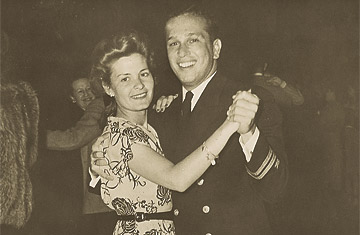
But humanity before policy: let me tell you a little bit about my parents. They were born within a month of each other in 1920. They met on the first day of kindergarten. At P.S. 114 in Rockaway Beach, Queens, the children were arranged by height and marched into class together in two lines. My father was the shortest boy, my mother the shortest girl. They walked into class that first day holding hands. It wasn't exactly a straight line ever after. Rummaging through their memorabilia, I found a picture of Ensign Malcolm Klein with a date at the Cocoanut Grove in Boston during the months that the U.S. Navy had sent him to Harvard Business School for advanced training as a supply officer in 1942. I found pictures of Mom with other guys as well. But Mom and Dad became engaged during the war, were married on May 13, 1945, and were inseparable after that.
Dad grew up in an upper-middle-class family; Mom was poor. Dad's father kept the books for the John F. Curry insurance agency--which meant, in effect, that he kept the books for Tammany Hall. Curry was boss during the Roaring '20s, the Jimmy Walker era. The '20s also roared for my mother's father Frank Warshauer. He was a professional musician who wrote a couple of Top 40 hits, which enabled him to buy a two-family house on the less fashionable bay side of Rockaway. (Dad's home overlooked the ocean.) The Warshauer house was my first home. If you've seen Woody Allen's film Radio Days, which takes place in Rockaway Beach, you get the picture: my parents and I lived upstairs; my grandparents and two maiden aunts, Rose and Madeline, lived downstairs. The aunts eventually become part of the family retinue when my grandparents passed away.