

(3 of 4)
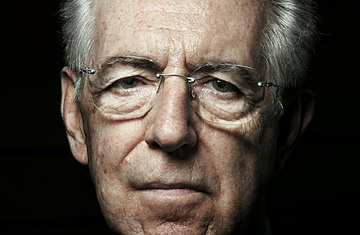
Monti's response might surprise. "Maybe they're right," he says. Though Monti has attempted to appeal to the masses--he refused to accept his Prime Minister's salary out of a spirit of shared sacrifice--he cannot honestly claim to be a man of the people. His father was a banker, and Monti was once an adviser to what some see as the quintessence of rapacious capitalism: Goldman Sachs. He has not run in any election for any office, and his friends think he never will.
Monti believes his detachment gives him an edge. The cozy relationship between politicians and their constituents, he argues, is the exact source of the nation's woes. "Italy has piled up huge public debt because the successive governments were too close to the life of ordinary citizens, too willing to please the requests of everybody, thereby acting against the interests of future generations," he says.
And don't expect him to bend. While he was commissioner for competition at the executive body of the European Union from 1999 to 2004, he earned the nickname Super Mario for butting heads with some of the world's most influential businessmen, from Microsoft CEO Steve Ballmer to former General Electric CEO Jack Welch. In 2001, Monti squelched a merger of GE and Honeywell, charging that the combination would smother competition in the aviation-equipment industry. Monti came under intense pressure from the U.S. to change his mind--Paul O'Neill, then U.S. Treasury Secretary, labeled his stance "off the wall"--but Monti refused to blink. Welch describes him as "cold-blooded."
The Danger of Success
Ironically, the more successful Monti becomes, the more trouble he might face. The country's politicians have backed him only because of the economic crisis, so the more reforms he implements and the further Italy pulls back from the brink, the less incentive they have to support him. As austerity measures begin to hurt, his popularity could also begin to evaporate. That potentially leaves Monti with a very narrow window of opportunity to implement change. In theory, he will remain Prime Minister until the next election, in the spring of 2013--barely enough time to realize his agenda--but he could find that window closing long before then. "The point is how to keep this pressure [to reform] even once the most visible elements of emergency hopefully are over," Monti says.