

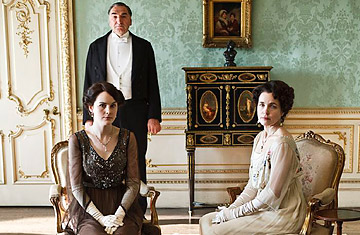
As the countess of highclere castle, the grand home that is also the set of the lavish Edwardian TV drama Downton Abbey, Fiona Carnarvon needs to demonstrate grace under fire. In the spring, about 120 crew members descend on her 6,000-acre (2,400 hectare) estate. They drag miles of black cables across her lawns, place hot lamps near the 400-year-old leather wall coverings and swing camera cranes dangerously close to intricate wood carvings. "It's a complete takeover," she says, seated on a floral-print couch beneath a chandelier. "And it's always utter chaos." If crew members dare to lift the family's antique chairs--including one that belonged to Napoleon--by the arms rather than the legs, they can expect a playful scolding from the lady of the manor. "I sometimes have to stop them and say, 'Excuse me! You lift a chair by its bottom--and a woman in your arms,'" she says. And don't even get her started on the crew's request to wrap ivy around Highclere's marble statues. "This isn't just a film set," she says, placing her cappuccino firmly back on its saucer. "It's also our home."
The Carnarvon family has lived on this estate in rural Hampshire, England, since 1679. The countess sees it as her duty to open the doors of Highclere not just to television crews but also to tour groups and schoolchildren. "It's a living house and a part of our national heritage," she explains. But sharing Highclere is also a matter of necessity. The Carnarvons, like many aristocratic families in Britain, are asset-rich but cash-poor. Exorbitant maintenance costs can make even the bluest of blue bloods cringe: Geordie, Carnarvon's husband and the eighth earl, estimates that he will need to sink $18 million into renovations in the coming years, from fixing faulty plumbing to restoring a 15th century barn with ancient timbers. Any revenue the house generates--from its tearoom, its filming contract, its $15 entrance fee--goes toward upkeep. "If I wanted Manolo Blahnik shoes or swish clothes from London, I definitely married the wrong man," says Carnarvon, 47. "But I like looking at sheep and walking across lawns with dogs, so it's fine. Everybody with houses like ours faces exactly the same challenges."
But not everybody with houses like Carnarvon's has the free marketing of a Downton Abbey. Now starting its second season in the States on PBS, the Emmy-winning hit--which charts the ups and downs of the aristocratic Crawley family and its busybody servants--has transformed Highclere into Britain's most talked-about stately home. In 2010, about 1,200 people visited the castle on its busiest days; in October, following the U.K. premiere of the second season, 4,000 visitors came in a single afternoon. The so-called Downton Abbey effect has boosted the fortunes of other stately homes too. Increased interest following the series' first season helped historic houses attract more than 17 million visitors in 2010, up from 15 million in 2009.