

(2 of 3)
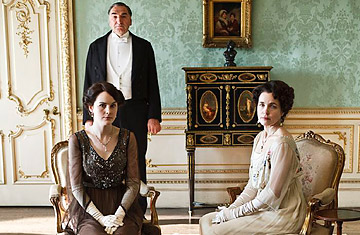
Part of Downton Abbey's appeal stems from the castle's Elizabethan grandeur. "It is a sculpture dedicated to the superiority of birth," says Julian Fellowes, the show's writer and creator. Highclere isn't just Downton Abbey's title location; it's effectively one of the show's main characters. Carnarvon understands this, and she's given the producers access to every corner. The abundance of furniture from the 18th and 19th centuries reduces the need for outside props, though Carnarvon draws the line at china and glassware. "They have all these lighting cranes above the tables," she says somewhat apologetically. "I'd much rather they broke their own kit than mine."
The Crawleys' life on Downton Abbey frequently mirrors the Carnarvons' reality. Just like the fictitious Lady and Earl of Grantham (played by Elizabeth McGovern and Hugh Bonneville), Carnarvon and her husband eat opposite each other frequently in the castle's state dining room, which counts 15 paintings on its walls, including a 14-ft.-tall (4 m) van Dyck portrait of Charles I. And the Carnarvons do gather around the red velvet sofa in the library after dinner--though they usually roll in a bar and play charades, and the countess is more likely to don leather boots and jeans than a corset and elbow-length gloves.
Shooting disrupts any cozy routines. During filming, the crew arrives at 7 in the morning and generally stays for 13 hours; each day results in just six minutes of TV footage. Carnarvon must constantly consider logistics: if Highclere is hosting a weekend wedding, filming a fox hunt on the pristine grass simply won't do. Naturally she sometimes feels trapped. "I'll be walking from my office to get a cup of tea and I suddenly hear, 'Silence!'" she says. "I always hope it's a quick scene. Otherwise I'm stuck there for a while."
Keeping Up with the Carnarvons
Downton Abbey has helped propel the Carnarvons' renovation efforts and given them the peace of mind of knowing they can sustain their staff--including two full-time chefs and an 88-year-old steward--for years to come. But the future of hundreds of other British stately homes remains less cushy.
Nick Way, director general of the Historic Houses Association, says Britain's historic homes face a backlog of repairs amounting to more than $600 million, up 50% from six years ago. For the 1,500 stately homes that his organization advises, the average cost of maintenance--from cleaning antique carpets to roof work--is $150,000 per year, and at least three properties budget more than $1.5 million. "Most of us live in our houses and decide how and when to decorate or renovate," Way says. "But if you live in one of these houses, it's not like that. The house lives you."