

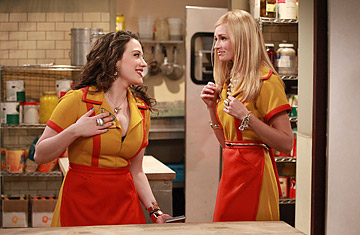
Television Two Broke Girls
(2 of 2)
There was also pooh-poohing, cherry-picking coverage of the Tea Party as it grew in 2009, though it at least had the media advantage of starting with an on-air rant by CNBC's Rick Santelli and being cultivated by Fox News hosts. But both movements face a challenge in the mainstream press, which is more at ease with Establishment sources and tends to assume passionate populists are lunatics.
The flip side is that passion, and maybe a little lunacy, gets attention. Take Roseanne Barr, who made headlines at OWS by calling (jokingly?) for a "maximum wage" of $100 million, enforceable on pain of the guillotine. Days later, NBC signed her to shoot a new sitcom set in a trailer park. The ferment of the '70s gave us Norman Lear comedies set in the ghetto (Good Times) and a junkyard (Sanford and Son). Much has changed since then, but prime-time TV is still the most populist medium we have--the one, therefore, where a corporate network and a Rust Belt Robespierre just might find themselves class-warring on the same side.