

Television Two Broke Girls
When President Obama announced a jobs program in September that relied on taxing the rich, Speaker of the House John Boehner responded from the reflex sector of the Republican brain stem: "Class warfare isn't leadership." A few weeks later, the Occupy Wall Street protests against wealth concentration grew, and GOP presidential hopeful Mitt Romney's synapses fired: "Class warfare."
It's the familiar chorus to an old song. But after the 2008 meltdown and the TARP bailouts, after Wall Street bonuses rebounded while mortgages stayed underwater, do Americans still hear class warfare as if it's a bad thing? Judging by the fall TV season, viewers may be up for, if not class warfare, at least some spirited class fisticuffs.
A pair of this year's highest-rated new shows make entertainment out of economic schadenfreude. The most bluntly titled is ABC's Revenge, whose premise is as simple as its name: When Emily Thorne (Emily Van Camp) was a girl, her father was framed for a crime by his wealthy Hamptons neighbors and died broken and ruined. Now grown up, she's returned under an alias to destroy the conspirators one by one each week through exposure, sabotage or any other means necessary. Revenge is basically a weekly anthology of payback, and Emily's list of targets--not just the town's ruling family but also the politicians, stock traders and hangers-on who enabled them--describes a social pyramid that protects the pharaohs at the top while consequences roll downhill.
The rich have long populated soaps, of course; working-class people used to be the material of sitcoms, from The Honeymooners to Roseanne. But with the popularity of Friends and Frasier--and as networks and advertisers shifted their sights to upscale viewers--TV became a (George) Jeffersonian democracy: sitcom characters moved on up.
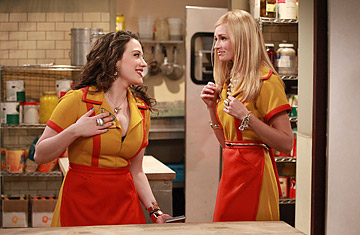
This fall's highest-rated new comedy, however, is CBS's 2 Broke Girls, about an economic odd couple: a street-smart Brooklyn waitress (Kat Dennings) and her new co-worker--roomie (Beth Behrs), whose dad--a Madoff-like scam artist--went to jail and left her to risk her manicure slinging burgers. After a decade-plus of sitcoms about the affluent (Modern Family's clan began this season with a trip to Jackson Hole, Wyo., because don't we all?), a comedy whose characters struggle to pay the rent is practically Brechtian theater.
Slow as prime time was to recognize the class divide, it may have been ahead of TV news, which took its time discovering Occupy Wall Street when the protests began in September. Once the cameras arrived in force, spurred partly by a YouTube video of police pepper-spraying fenced-in female protesters, they often came to sneer. On CNN, Erin Burnett's whirlwind tour of OWS in lower Manhattan went heavy on the bongo players and wacky costumes while insinuating that the less eccentric protesters were hypocrites because some of them wore Lululemon yoga pants and used computers. (The only legitimate ways to protest corporate welfare, of course, are to wear trash-can liners and communicate via coconut shells connected with hempen string.)