

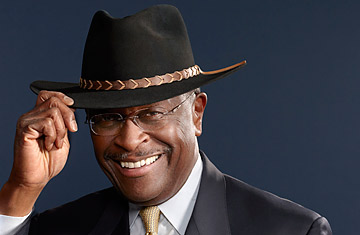
Herman Cain
(3 of 4)
Cain strikes some people as an unlikely hero for a Tea Party movement the NAACP and some liberal activists have called racist. But that might work in Cain's favor, since supporting him allows conservative activists to demonstrate a lack of prejudice. "The Republican Party is not rich, old, fat men who smoke cigars," says Melonaie Gullick of Conway, Ark., who saw Cain speak in Kansas City on Oct. 1. "To all of those people who say that the Tea Party is a racist organization," Cain says in one online video, "eat your words!"
In fact, the Tea Party touts multiple black heroes at the moment. In addition to Cain, there are the House freshmen Allen West of Florida and Tim Scott of South Carolina, both extremely combative partisans. Together they join more familiar names like Alan Keyes and Clarence Thomas in espousing a hard-line brand of conservatism rare among past generations of black politicians. "The black conservatives we are seeing today are kind of a new phenomenon" and are more ideological than their forebears, says Shelby Steele, who studies racial identity at Stanford University's Hoover Institution. Cain writes that he was shaped by his father's admonition not to feel like a victim or resent America because of racism. "I'm not mad at America," he told Hannity. "I'm proud of this country."
Although he claims he can win one-third of the black vote, Cain doesn't dwell on race. But the topic can trip him up. After reports surfaced that Perry had leased a property with a racially offensive name, Cain said the Texan had been "plain insensitive." Even that mild criticism annoyed conservatives like Rush Limbaugh, and Cain backpedaled. "I in no way believe that was a reflection of Governor Perry in terms of his attitude toward black people," he says.
What's in It for Him?
The big question behind the Cain hype is whether it's just that. Is he after real votes--or just fame and fortune? (He's had his own radio show for more than a decade and is a motivational speaker who can win five-figure sums on the lecture circuit.) Cain has mostly been off the campaign trail this month for his book tour. His top aides in Iowa and New Hampshire quit this summer, saying he wasn't making a real effort. "I am a serious candidate," Cain insists, noting that he is already wealthy. "I don't do things for self-promotion."
Still, Cain can seem ill prepared for the presidential stage. He says he won't offer a plan for Afghanistan until experts brief him in the Oval Office. Asked this spring about Middle East peace, Cain seemed unfamiliar with the crucial concept of a right of return for Palestinian refugees. He has also confessed to having "little knowledge" of Islam and fretted that "many" Muslims "are not totally dedicated to this country." And being a relative political novice can make for dangerously blunt statements. Asked on Oct. 5 about anti--Wall Street protesters, for instance, Cain declared, "If you don't have a job and you're not rich, blame yourself."