

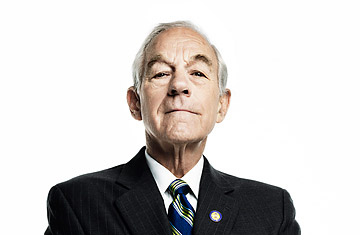
Twilight descends in new Hampshire as an old man climbs onto his soapbox. LIBERTY: TOO BIG TO FAIL reads a banner hanging in the jam-packed tent. He is hardly a commanding figure, but a thousand people chant his name and lean in to listen, ready to follow, as Ron Paul delivers his genre-bending stump speech. There are no focus-grouped slogans, no empty calories: Paul's talk is more like a high-fiber graduate seminar on economic theory, forgotten history and the nooks and crannies of the U.S. Constitution. "The Federal Reserve system and all their members have been counterfeiters for a long time," he says, his reedy voice straining. "Sound money is connected to free markets and the freedom message and the Constitution, and we can bring this all together for people. It fascinates me, and I'm sure it must fascinate a lot of you also."
In normal times, Paul's esoteric pitch might leave voters bemused, bewildered or just bored. But these aren't normal times, and the rapt crowd roars its approval. The attendees share his conviction that a great man has met his moment in history. "Our time has come," Paul declares, and this time, it may be more than wishful thinking.
For decades, the Republican Congressman from Texas has preached much the same brand of libertarian politics and Austrian economics. When he ran for President four years ago, Paul drew a zealous but narrow following, and his warnings that murky monetary policy, runaway spending and a sprawling foreign empire would ruin the country struck many Republicans as kooky. His GOP rivals smirked or simply ignored him. Although Paul raised a staggering $35 million, he captured just 1% of Republican delegates.
But in the four years since, the world has changed in mostly grim ways that seem to affirm Paul's worldview. His vision of an eroding Constitution and a Washington — Wall Street cabal helped spark the Tea Party movement. Conservatives who once sneered at his foreign policy as being "isolationist" have grown weary of war. His call for a more accountable and transparent Federal Reserve has morphed from quaint obsession to mainstream Republican talking point in Congress and on the campaign trail.
As presidential contender, Paul remains an extreme long shot. He lags behind central-casting candidates like Mitt Romney and Rick Perry in polls. The pillars of his libertarian philosophy — restoring the gold standard, abolishing the central bank, letting states legalize drugs, gutting the size of government and the social safety net, sharply reducing America's global footprint — are too radical for the typical suburban swing voter. Not to mention that the 76-year-old Paul would be the oldest ever first-term President.