

(3 of 8)
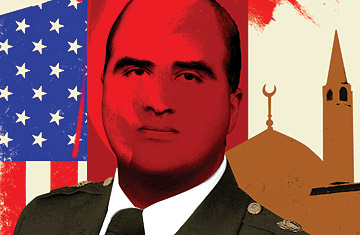
So what are we to make of the free agents who might have never sworn allegiance to a band of jihadist brothers or plotted a conspiracy of violence, just watched some YouTube videos or downloaded some sermons and came away with visions of carnage dancing in their heads? "We have to be careful not to let our definition of terrorism become too broad," said former Homeland Security Secretary Michael Chertoff last year. "Particularly when we get to the individual lone wolf, then it really does become hard to distinguish between the person who killed the students at Virginia Tech and the person who might do the same thing simply because they read something on the Internet about bin Laden and that happened to appeal to their psychology." Once everything is terrorism, he warned, then nothing is. But while the motivations of the Virginia Tech gunman seemed perversely personal, Hasan had spent years telling anyone who would listen that the U.S. war effort in Iraq and Afghanistan was immoral.
The Making of a Radical
Hasan was a walking contradiction: the counselor who himself needed counseling; the proud soldier who did not want to fight, at least not against fellow Muslims; the man who could not find a sufficiently modest and pious wife through his mosque's matchmaking machinery but who frequented the local strip club. A man supposedly so afraid of deployment that he launched a war of his own from which he clearly did not expect to return alive. "Everyone is asking why this happened," said Hasan's family in a formal statement, "and the answer is that we simply do not know."
But if this is the new face of terrorism in America, we need better facial-recognition software. Hasan's motives were mixed enough that everyone with an agenda could find markers in the trail he left. For those inclined to see soldiers as victims, he was a symptom of an overstretched military, whose soldiers return from their third and fourth deployments pouring out such pain that it scars their therapists as well. "We've known for the last five years that [deployment to Afghanistan] was probably his worst nightmare," cousin Nader Hasan told Fox News. "He would tell us how he hears horrific things ... That was probably affecting him psychologically."
That diagnosis seemed like sentimental nonsense to people who noted how well Hasan matched the classic model of the lone, strange, crazy killer: the quiet and gentle man who formed few close human attachments but, reported the New York Times, used to chew up food and let his pet parakeet eat it from his mouth; when he rolled over during a nap and accidentally crushed it to death, he visited the bird's grave for months afterward.