

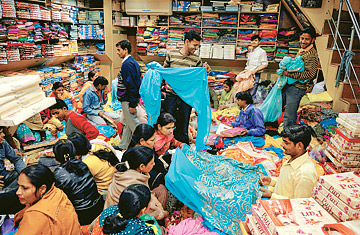
Shoppers visit a sari store in Delhi's Chandni Chowk bazaar
(2 of 2)
The sari still has no rival as an iconic image of Indian femininity. Look no further than Indian soap operas, in which seemingly every actress wears the garment, impeccably ironed and draped, while cooking and scheming against her mother-in-law. But in real life, few Indian women have the time--or the household help--to maintain a wardrobe of six-yard-long starched cottons and silks. The younger ones have cast off the sari as easily as they've started buying their own cars or renting their own apartments--two other once unthinkable emblems of independence. Kriti Budhiraja, 20, a political-science student at Delhi University, says she's sad to see the sari fading, slowly and almost imperceptibly, from Indian life. But she understands the reasons: "There is a general perception that you would consider a woman in Western formal wear more empowered than her more traditional counterparts." Then again, maybe real independence for Indian women means wearing whatever you want without worrying about what other people think.
Global Dispatch For more postcards from around the world, visit time.com