

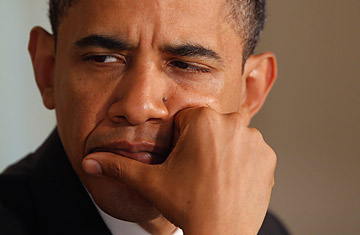
President Barack Obama
(2 of 2)
If Obama is to succeed with his domestic-policy agenda, he needs to convince people that action is necessary on these abstruse issues. He is going to have to demand clear, comprehensible solutions from Congress, and he is going to have to admit what most civilians know in their gut: that a price must be paid for a better, more secure health-care system and action on climate change. This will be easier with the more immediate issue, health-insurance reform. There are compromises that can be made--and Obama should admit that John McCain's plan to tax employer-provided health benefits, at least for wealthier Americans, was a good idea and include it.
It will take relentless focus to sell health reform and solve the continuing economic crisis. That will not leave much time for climate change, at least not this year--and that is a good thing, because the Waxman-Markey energy bill passed by the House is an excellent candidate for euthanasia. It is a demonstration of all that's wrong with the legislative process in latter-day America. There is a simple solution to this problem: a carbon tax to discourage people from using fossil fuels. That tax could be immediately refunded in the form of lower payroll taxes. But the House Democrats, still playing by Reagan-era ground rules, were too frightened to go there: they proposed instead a weak, inelegant cap-and-trade system of the sort that has provided precious little carbon reduction in Europe. It is Potemkin legislation, designed to give only the appearance of dealing with a problem.
Obama wants to be a transformative President. To do that, he must transform the terms of debate--and the greatest impediment to change is the nation's crippling, 30-year tax allergy. He cannot finesse this. He needs to take these issues one at a time, make his argument clearly and hope that the public is finally ready for the sacrifices that make real progress possible.