

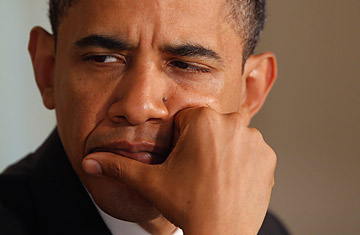
President Barack Obama
Barack Obama has been president for six months now, and we are beginning to learn a few things about how he does business. The most surprising of these is that he is a vehement traditionalist, a small-c conservative, despite his opponents' best efforts to paint him as a radical. In foreign policy, this has meant a return to traditional diplomatic devices--treaties, alliances, negotiation, a global strategic vision--after the ad hoc, go-it-alone bellicosity of his predecessor. No less a high priest than Henry Kissinger recently called Obama a "chess player," which is high praise in the world of diplomacy. In domestic policy, however, it has meant an undue respect for the institution of Congress, a sclerotic body badly in need of creative leadership. This is leading Obama into trouble.
It is likely to be an ugly summer of sausage-grinding in Washington. Obama's two biggest domestic-policy proposals--health-care reform and alternative energy--will be pulverized and reshaped by the Senate. The end products may be unsightly and counterproductive, if passed. A third initiative--a relatively modest regulatory reform of the financial system--is being chewed to dust by the termite lobbyists of the banking industry. A fourth initiative--the effort to buy off the banking system's "toxic" assets--is languishing, near comatose, because of the bankers' intransigence.
The fact is, Obama may be blowing a major opportunity for reform with his domestic-policy diffidence. He came to office faced with an unprecedented economic crisis, and he focused on it successfully during his first 100 days, giving two excellent speeches about the need for a stimulus plan and general economic reform. He has lost that focus as his other initiatives have come online; he has failed to speak with precision or clarity about the bills wandering through Congress. He has failed to make clear what needs to be in those bills--and what can't be--if he is going to sign them. He also needs to update the public on his stimulus plan, especially now that his Vice President inadvertently dissed it. And he needs to make a direct assault on the greedheads who created the Ponzi economy and are now trying to gut his plan to make them do business honestly.
This was never going to be easy. The past 30 years have created a crimped, big-C Conservative playing field when it comes to public policy. Congress cringes at the hard stuff, especially anything that can be labeled a tax or a regulation. To make things more difficult, the public doesn't consider health or energy reform as crucial as the President (rightly) does. Most people are happy with their health insurance, although they're worried about losing it. And they are not clear about the sacrifices necessary to address climate change--or the national-security issues raised by our dependence on oil provided by some of the more disgraceful governments in the world.