

(4 of 4)
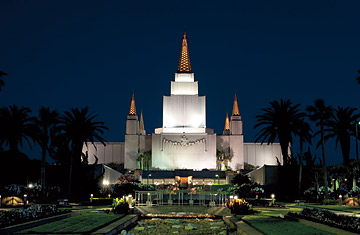
That has made the aftermath of Prop 8 all the more disturbing to them. Furious gay-rights activists targeted the church, picketing temples in several states. A prominent Mormon Sacramento musical-theater director was hounded from his job. Tom Hanks declared the Mormons "un-American." (He later apologized.) Alameda Mormons like Pimentel read fire-breathing quotes in the San Francisco Chronicle and fielded "Dear Neighbor" notes.
Says Stewart: "I hear they threw bags of urine at a temple. If we had lost, it never would have occurred to me to react that way." Three months after the election, she says, "I don't feel quite the same way about our community." She felt frozen out of conversations among other parents. "You think, This will go away. But it doesn't seem to. I think about my kids in school," she says. "I want them to be accepted, to feel it's O.K. to be different." Of course, this is precisely the sentiment motivating the gay-marriage movement.
But as a Mormon concern, it long predates Prop 8. For a century, the Mormon church had a rocky and sometimes bloody relationship with American culture at large; persecution by "gentiles" became key to LDS self-understanding. But thanks to their industry, optimism and civic-mindedness, many Mormons have found their place in the American fabric. Ballard says, "We'd like to be seen as mainstream — if that means being part of the national conversation about issues of morality and having our members respected as contributing members of society. But we have to hang on to what's true, regardless of where society goes." He adds, "We've never felt that we were being more understood or more appreciated, at least in my 30 years as a general authority." Ballard helped supervise an outreach program during the heightened "Mormon Moment" of the Romney campaign as apostles fanned out to visit media editorial boards. However, he contends that the "real power" determining public perception of his faith is "when a member of the church meets his neighbor, and the neighbor sees that he has objectives to his life and is finding happiness in his field. That's starting to happen all over."
Not everyone is as upbeat. Christopher Bigelow, a publisher and satirist (he edited the Sugar Beet, a kind of LDS Onion), says, "In the 20th century, we were allowed to grow and even gain a measure of respect." But Bigelow sees that as a mere "doughnut hole" in a darker dynamic. Gay marriage, he says, belongs to a class of behaviors increasingly tolerated in the broader society that the church must nonetheless oppose. He dips into an old but potent vocabulary: "As civilization keeps moving from standards we think God wants people to hold, it's inevitable that we expect persecution." Back in Alameda, Stewart's husband Brad says about Prop 8, "I hope I never have to do it again," but adds grimly, "I expect that I will."
The Dilemma of Deployment
The Church has not decided on its future role in the gay-marriage debate. The heat surrounding Prop 8 may die down by next year. "Talking about what may or may not happen in 2010 would be speculation, and I wouldn't want to do that," says Apostle Quentin Cook. The LDS abstained from same-sex-marriage battles in Iowa and New England. But avoiding a California rematch may be tougher. Notre Dame's Campbell says, "If it appeared that the church sat out next time because it was criticized this time, there might be a credibility question." But given a national trend toward supporting gay marriage, he asks, "Does the church want the public to identify it primarily as a political body opposing an issue that comes back again and again?"
Jay Pimentel, for one, will be spared that profoundly tricky question — for now. Shortly after the "Dear Neighbor" letter, Salt Lake City tapped him to lead all missionary activity in eastern Germany. The move entails sacrifices; he'll be leaving his job and uprooting an adult son with special needs. But it will put him in a field where the LDS has concerns — its spectacular international growth has begun to plateau — and incidentally remove him from any 2010 proposition battle.
Is he relieved? "I might feel relief," he says finally. "Or I might feel a kind of longing, a desire to be there." Then Pimentel expresses an archetypal LDS sentiment: "I like to help where I can be helpful."