

(3 of 4)
It's precisely those resources, though, that have drawn the LDS into the eye of the country's biggest cultural tempest. The church embraced church-state separation in the 1800s and explicitly recognizes the right of independent-minded officeholders like Romney and Reid to make their own calls. Retail politics, however, is different. Although Salt Lake City officially rejects wading in on most issues, it makes a large exception: matters of morals, with an emphasis on gender debates. Mormon activists helped halt the Equal Rights Amendment in the 1970s and '80s and gay marriage in Hawaii (1998) and California (2000).
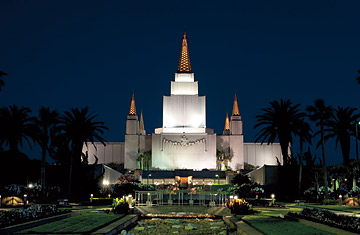
Prop 8 constituted a kind of perfect political storm of theology, demographics and organization. At the Alameda Meeting House last June (as at other Mormon churches statewide), a letter from Monson and his counselors advised believers to "do all you can to support the proposed constitutional amendment by donating of your means and time." A string of Protect Marriage coalition meetings followed. They never occurred on LDS property, but they were overwhelmingly Mormon in attendance and sought Mormon support. Alaina Stewart, a church member, was asked to employ a list of "who in the ward we thought could contribute. We'd call and say, 'We're asking you to give such and such an amount,'" she says.
Some declined. A senior church official had promised Mormons who disagreed on Prop 8 that "we love them and bear them no ill will." This played well in Alameda, where many LDS members ferry their children to classmates' birthday parties thrown by same-sex parents. Stewart says she intended from the start to vote yes. But she adds, "I can certainly understand why members of the gay community wanted to receive this rite. I think there were ward members on the fence, thinking, Why not give them marriage?"
But the general authorities in Salt Lake City increased the pressure. A broadcast to all churches outlined the pro-8 ground campaign, with titles like "Thirty People in Each Ward" and "More than Four Hours per Week." Craig Teuscher, the Alameda ward's regional stake president, reiterated in church the seriousness of Monson's request to congregants.
The new push for the proposition had a rational side: the church claimed that the legalization of gay marriage would threaten its tax-exempt status if it refused to perform gay nuptials. (Most legal scholars disagree.) But belief in Monson's supernatural connection also played a big role. Says Stewart: "The Prophet's telling us to stand up. When he speaks, you're realizing that there may be things that I don't see." Asks Gayle Teuscher, the stake president's wife: "If I believe that the Prophet is a true prophet of God and disregard his counsel, what does that say about my belief in God?" Sunstone's Carter says most Mormons who explained their stance for his publication "said, 'The Prophet has a longer view than we do' or 'It was revealed to me.'" Clark Pingree, a Bay Area Mormon gay activist, says that of the various Mormon pro-8 rationales, the Prophet-made-me-do-it line was "the most infuriating, because people say, 'I'm showing my faith by voting against what I know in my heart.' It's a force field you will never penetrate."
Politics — or Persecution?
Proposition 8 won by less than 5% of the vote. Individual Mormons contributed $20 million of its $40 million war chest. Asked whether the belief in prophecy, transmuted into funding and activism, could have been decisive, David Campbell, a University of Notre Dame political scientist (and a Mormon) who has studied LDS political activity, says, "I think that's arguable, in the positive sense of the word." Many Alameda congregants who had initially refused Stewart's fundraising efforts changed their mind; she exceeded her goals. Mormons made calls, placed flyers and planted lawn signs. They thought they were being good citizens.