

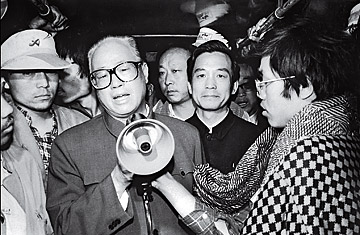
Knowing efforts will probably prove futile, Zhao pleads with students to "treasure their lives" and end their hunger strike.
(3 of 3)
The China that Zhao describes is very much alive now. The country's team of leaders continues to promote economic freedom yet intimidates or arrests anyone who dares to call for political change. At the end of last year, more than 300 Chinese activists, marking the 60th anniversary of the Universal Declaration of Human Rights, jointly signed Charter 08, a document that calls on the party to reform its political system and allow freedom of expression. Beijing responded as it often does: it interrogated many of the signatories and arrested some, including prominent dissident Liu Xiaobo, who was active during the Tiananmen protests.
At the end of his journal, Zhao concludes that China must become a parliamentary democracy to meet the challenges of the modern world--a remarkable observation from someone who spent his entire career in service to the Communist Party, and one that might well provoke a debate on China's Internet discussion boards and in its chat rooms. Zhao's ultimate aim was a strong economy, but he had become convinced that this goal was inextricably linked to the development of democracy. China's ability to avoid another tragedy like Tiananmen might depend on how quickly that comes about.
Ignatius is the editor of Harvard Business Review and one of the editors of Prisoner of the State