

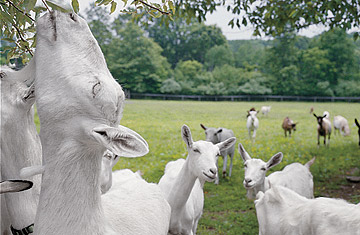
Goats near Hopewell, N.J., are slaughtered on site before Chef Michael Psilakis make roasts, chops, and more.
(4 of 5)
Whole Roasted Goat
Recipe from: Michael Psilakis, Owner/Chef of Anthos, Kefi, Mia Dona
Equipment:
• Motorized roasting spit
• Paintbrush
• 20 ft of 14-guage aluminum wire
• 2 U-Bolt clamps
• 2 pairs of pliers that can cut wire
Ingredients:
• 1 goat, skinned, gutted, hung for two days in a cool dry place
• 6 25lb. bags of charcoal
• 30 lbs. wood chips, soaked over-night in water, preferably hickory
• 2 quarts of lemon juice
• 1 quart Extra-Virgin Olive Oil
• 4 TB dried Greek oregano
• Salt and pepper to taste
Directions:
1. Decapitate goat, reserve head for oven roasting or braising.
2. Working on a large flat surface starting from the back of the goat, take the skewer and push it through until goat is secured by rear fork on the skewer. The fork should go into the upper quarter of the two hind legs. Then, take the second fork and slide that into the front shoulder and secure. Use a hammer if necessary.
3. Turn the goat on its back, using the wire, fasten the neck of the goat to the skewer by wrapping it around both. Make sure to fasten firmly using the pliers to twist the wire.
4. Take the front legs and pull them above where the goat's head would be, as if their "elbows" were next to their "ears." Fasten the front legs to the skewer using wire in a similar fashion to securing the neck. Extend the hind legs and tie them to the spit in the same fashion as the front legs. Turn the goat onto its side.
5. Unbolt the 2 U-Shaped clamps. Take the first clamp and pierce it through the back of the goat under the rib cage. Go through the backbone into the cavity of the animal. Place the bar that holds the clamp together and bolt the two bolts as tightly as possible to the clamps against the spit. Move 6 inches to the rear and fasten the other clamp to the skewer.
6. Light the fire using coals and the hickory for flavor. Wet the goat down with water inside and out. Generously season with salt and pepper, DO NOT BE SHY.
7. In a mixing bowl, combine lemon juice, oil, oregano, salt and pepper to taste, and whisk. Transfer to a bucket. This will be your basting agent.
8. Spread the charcoal and wood chips to the sides and front and rear of where the goat will hang so there is no direct heat. Indirect heat is key here. The heat should be approximately 300-325 degrees. If you can hold your hand next to the goat as it spins for 10 seconds, it is the right temperature. If you cannot last 10 seconds, it's too hot.
9. Put the goat on the rack and fasten to the motor. Put the motor on the slowest setting. For the next 6-7 hours, baste frequently using the paint brush and maintain the temperature. The goat is ready when you can take a rib and pull it off with your hands without any resistance. Any animal roasted on a spit is best had right off of the spit. I personally don't recommend transferring this to a table. Go right at it with a fork!