

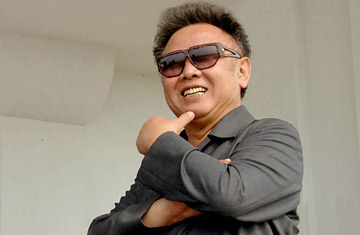
North Korean leader Kim Jong Il, viewing farms and fields during his visit to the Sinam Cooperative Farm in Ryongchon County, North Korea.
(3 of 3)
A 2006 State Department estimate puts the amount of counterfeit currency in circulation at $45 million to $48 million. Estimate is the key word. Of all the illicit businesses from which North Korea profits, counterfeiting is the one about which outsiders know the least. U.S. officials say they don't believe the North Koreans produced the equipment to print such high-quality counterfeit bills. If that's the case, where did they get it from? No U.S. agency interviewed for this story, including Treasury, State and the Secret Service, could say. U.S. sources also say they do not know where in North Korea the notes are produced.
It does seem likely, however, that Kim's government is running the scam. Harvard researcher Chestnut says that since 1994, there have been at least 13 incidents in which North Korean officials, diplomats or employees of government-owned companies have been implicated in carrying counterfeit currency abroad, mostly to embassies in Europe and elsewhere in Asia, from which the bills are sold and slipped into local circulation. Pyongyang last year denied it had ever forged U.S. currency but said it would, in concert with other nations, continue its fight "against all sorts of illegal acts in the financial field."
Hill, the U.S.'s top negotiator with North Korea, says, "I don't think you can ask any government--not ours, not any other government--just to ignore these things and to pretend it's not going on. So we did need to take action." But it's unclear how far the U.S. intends to go. After the release of the $25 million from the Macau bank, North Korea promised to use the money for humanitarian purposes. Now that it is back at the negotiating table, however, Pyongyang has less incentive to clean up its game--and every reason to bet that the world will tolerate its criminal enterprises in exchange for cooperation on the nuclear front. Skeptics of engagement with Kim say, given the nature of the regime, his commitment to any arms-control agreement is doubtful at best. "This is a government that has shown every willingness to sell anything to anybody," says former Pentagon official Dan Blumenthal. "Ultimately our security is at stake in terms of their willingness to possibly sell WMD."
So what can the U.S. and its allies do? As a start, Asher and others argue that Washington could lean more on China and South Korea to beef up their surveillance and interdiction of suspect ships coming out of North Korean ports--which over the long term could dissuade Kim & Co. from pursuing its Sopranos-state operations. But that would take time, and right now the U.S. appears focused on getting a nuclear deal out of Pyongyang, no matter what sort of activities it might have to overlook in the process. For Kim and his cronies in Bureau 39, that means business is only going to get better.