

ONLY a few years ago, much of the earth still seemed as desolate and inaccessible as the moon. Now the wastes of Antarctica have been surveyed and found replete with coal; modern cities are sprouting in Siberia. Roads penetrate Africa's rain forests, leading to lodes of tin, bauxite and uranium. Arabian deserts are crisscrossed with oil pipelines; even the ocean depths may soon be farmed and mined.
Yet as men use more and more of the earth's bounty, troubling questions arise. Is it worth cutting the hardwood reserves of the Amazon River basin if the price is the destruction of the thin jungle soil? Should the oil under the North Sea be drilled at the risk of gravely endangering the beaches and wildlife of six nations? Can civilization's need for fuel and other materials be satisfied without despoiling the few wild areas left on earth?
The Lure of Rebirth
Today a dramatic conflict between man and nature is being staged in Alaska. Wild, virtually unspoiled and fabulously rich in natural resources, the 49th state is a testing ground of American values. The Aleuts aptly named the place Alakshak, or "Great Land," and modern Alaskans just as properly think of it as America's last frontier.
Everything about Alaska is extreme. It is physically as big as Texas, California and Montana combined—586,000 sq. mi. Just one of Alaska's scores of blue-green glaciers is the size of Holland; one wildlife preserve could hold Hungary. Alaska's 33,000-mile coastline doubles that of all the coterminous U.S. While Port Walter in the southern panhandle is flooded by 18 feet of annual rainfall, the wind-dried North Slope is an Arctic desert that gets only four inches of precipitation a year. At Fort Yukon in the vast central plateau region, temperatures plummet from 100° in the summer to 75° below zero in the winter. To travel from the state capital of Juneau to the outermost Aleutian island of Attu is to span 2,000 miles and four time zones. Yet Alaska has fewer people than any other state: 293,000, the equivalent of Akron.
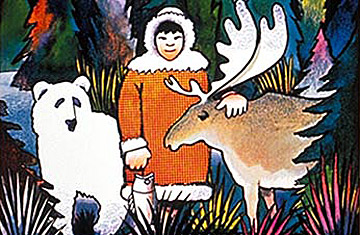
To conservationists, Alaska's most precious resource is its natural grandeur. The place has twice as many caribou (600,000) as it has people, plus 160,000 moose, 40,000 Dall sheep and 36,000 reindeer. No one who has watched spring come to the Brooks Range is ever quite the same again. After three dark months of frozen silence, the sun reappears as a long, slanting shaft that illuminates only the highest peaks. Each day the light descends, until finally even the deepest valley is bathed in warmth. The ice breaks, roaring like cannon fire, and the ground explodes with color as wild flowers bloom. Big bears stagger out of hibernation. Rivers teem with salmon, grayling and char. Caribou march in long single files toward new feeding grounds. Glacial ice glitters like emeralds and sapphires. The world seems reborn.
Rebirth is the great Alaskan lure: the state is full of escapees from the crowds and pressures of the "Lower 48" states. The frontier spirit is implicit in dozens of fetching place names: Big Fritz, Mary's Igloo, White Eye, Tin City, Hungry, Cripple, Stampede, Eureka, Paradise and Purgatory. It is clear in the state's forgiving customs. There is no death penalty, for example, and if a first-time murderer is a man, he rarely spends more than a few years in prison. For a woman,