

(2 of 8)
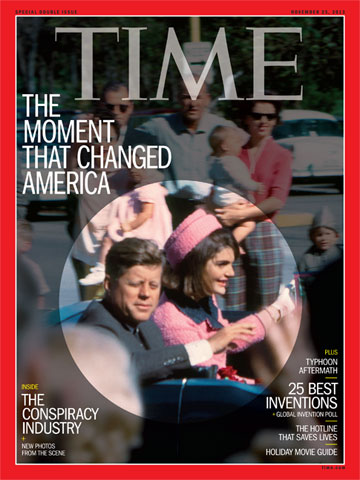
At some point, it occurred to me that the truly resonant image from that grisly scene was the traumatized First Lady on the trunk of the limousine. That is the most human and understandable moment of the whole shocking sequence. For 50 years, Americans have been reliving that impulse to struggle away from the blunt terror of the assassin's bullet and instead grope for pieces that might restore a kind of order.
It was inevitable, I have come to believe, that the Kennedy murder would fester rather than heal. The shock was too great to be neatly resolved. The stakes were too high. But this fact has had consequences. A large majority of Americans--no less than Secretary of State John Kerry, according to a recent remark he made--rejects the official history and embraces countertheories involving dark, extremely dark, allegations about American society. Like a tornado, the Kennedy conspiracy theories have spun off whirlwinds of doubt about other national traumas and controversies, from 9/11 and FEMA camps to TWA Flight 800 and genetically modified foods. The legacy of that shocking instant is a troubling habit of the modern American mind: suspicion is a reflex now, trust a figment.
DEATH IN DALLAS
Doubt was not born that day. Doubt was already deeply settled in Dallas long before Kennedy arrived. Nostalgia has painted the 1950s and early 1960s in pastel colors, an age of innocence and prosperity--but in truth, they were bitter times. The sense of common purpose Americans shared during World War II was fractured by the Cold War, and the civil rights revolution hammered at the fault lines. Right-wing conspiracy theorists perceived a shadowy network of communists and their friends intent on weakening American culture and shifting power to a corrupt United Nations.
Dallas was a hotbed of this kind of thinking. Oilmen H.L. Hunt and Clint Murchison bankrolled far-right propaganda, while newspaper publisher Ted Dealey trumpeted an extreme line in the pages of the Dallas Morning News. When Kennedy cashiered Army General Edwin Walker for spreading the ideas of the ultraconservative John Birch Society to U.S. troops, Dallas welcomed the general with open arms. Walker soon made himself a thorn in Kennedy's side, as writers Bill Minutaglio and Steven L. Davis document in their new book Dallas 1963. He helped incite a mob of segregationists at the University of Mississippi in 1962 and later egged on a group of his disciples as they orchestrated a surly protest against U.N. Ambassador Adlai Stevenson's visit to Dallas in October 1963.
Stevenson's ugly experience persuaded the influential Dallas retailer Stanley Marcus to warn the White House that his city wasn't safe for a presidential visit. Kennedy shrugged off the message. But the possibility of violence was on his mind as he prepared to visit Dallas. His widow would recall that he reflected on the ease with which a sniper could open fire from a high-rise window.