

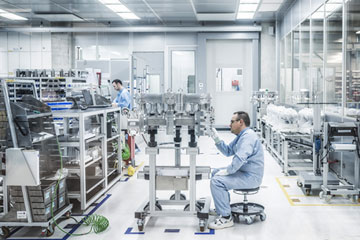
Laser manufacturer Trumpf relies on the euro zone for nearly half its sales.
(4 of 5)
Yet in order for Germany to be Germany, Spain, Italy and Greece would also have to be their old spendthrift selves. The notion that every European country can cut public and private spending at the same time and prosper has always been flawed. Basic economics says that trade surpluses and deficits between countries, also known as current account balances, must always add up to zero. If one country, like Germany, runs a surplus, others--like Italy, Greece and Spain--must run equal deficits. As the export giant with artificially low wages, Germany maintains constant surpluses, while other euro-zone countries like Italy, Spain, Greece and Portugal run deficits, buying German goods and using Germany's excess savings to fund investment at home.
The entire dysfunctional cycle was made possible by the euro, which forced countries to give up independent monetary policies in exchange for the benefits of a single currency. Pettis points out that after the introduction of the euro, "all these countries saw their trade deficits expand dramatically or their surpluses turn into large deficits." To be fair, the southern nations didn't use the days of plenty to reform as the Germans did. And Germans benefited greatly from the euro, as even the conservative Mittelstand leaders of Stuttgart acknowledge. Sales to other euro-zone countries were no longer affected by currency fluctuations, says Leibinger-Kammüller. Daimler could compete with, say, Fiat without the fear that a weak lira would make German cars unreasonably expensive in the global market and give the Italians an advantage. The benefit to German companies has been enormous, since sales to other euro-zone countries make up roughly half their exports.
Europe's Endgame
Now that Southern Europe isn't as able to fund Germany's trade surplus, the euro may survive only if Germany picks up the slack. But getting Germans to spend is a huge political challenge for Merkel. There's a general election coming up in September, and while Merkel remains popular and will most likely be re-elected, it's unclear what kind of coalition she will be able to form.
There are a few glimmers of hope. Germany has begun talking about exporting something aside from machinery and austerity: a new plan to fund the efforts of countries like Portugal to replicate Germany's much lauded vocational-training program. It's an important step not only because it would help address southern Europe's youth-unemployment epidemic but also because it acknowledges the fact that investment, not just budget cuts, is required to help Europe grow out of its debt problems. There's also been some increase in German wages recently, though not enough to make up for the previous decade of slow growth. But urgent policy reforms at home--like lower consumption taxes or fiscal stimulus to help bolster growth at a time when the rest of Europe is shrinking--are unlikely to happen anytime soon.