

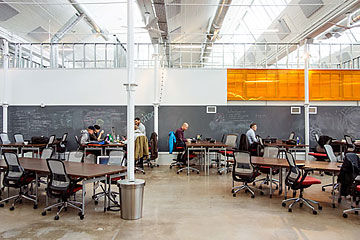
Incubator overload, Wolverson
(4 of 4)
It shouldn't be, some critics say. Luke Williams, an entrepreneurship professor at New York University's Stern School of Business who heads its innovation and entrepreneurship center, says start-up schools can't compare to the experience of being in business school. "There's a big difference between jumping in and out of random courses and going through the journey of an MBA," says Williams. "We give students access to masters of the discipline, and our network is far deeper than what accelerators like TechStars or a start-up course can offer." Blank agrees that universities provide a more rounded experience. "If you fail at coding, then you could be without a degree for the rest of your life," says Blank. But he cautions traditional educators that these alternatives are cropping up because "universities tend to lag what's going on in the tech industry by five to 10 years."
There are other reasons that start-up-school students could wind up disappointed. Venture-capital funding of Internet companies dropped 42% in the first nine months of 2012 from a year earlier, according to research group VentureSource. So while the number of early-stage seed funds, incubators and accelerators has grown, there may be less money available to help start-ups grow into bigger companies. "There's a mismatch between angel money and venture capitalists. When the music stops, someone isn't going to have a chair," says Ed Barrientos, a Silicon Valley--based angel investor. More large companies like Facebook and Google are acquiring fledgling start-ups before venture capital steps in. But some experts worry that the start-up factories are encouraging cookie-cutter thinking. "The Y Combinators of the world are all focused on consumer tech companies," says Blank. "There are much bigger ideas going on elsewhere."
Weiner says he doesn't worry too much about all that. He just likes the energy of the people working at Galvanize and the chance to interact with founders of successful start-ups like Uber, a Web-based car-service company, and Forkly, a foodie application for restaurants, which both rent workspace in the building. Even if Weiner doesn't launch his own start-up after he finishes gSchool, he thinks just being in the building will help land him a job at a cool start-up. "And if that burning idea comes to me," says Weiner, "I'll be a better founder."
FOR MORE STORIES ABOUT ENTREPRENEURS, GO TO time.com/smallbusiness