

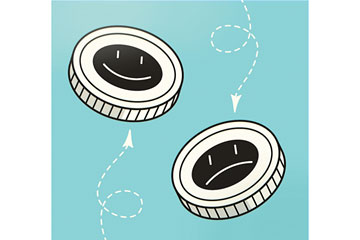
We've heard plenty about the wealth divide in the U.S. economy. But there's another important divide--the one between consumers and corporations. If you look at how U.S. households have been behaving lately, you'd think it was all blue skies. Consumer confidence is at a five-year high, thanks to higher stock prices and a recovery in the housing market. Home prices have had their biggest jump since 2005. Consumers, finally feeling more flush, are buying that new car or electronic gadget and bolstering GDP growth a bit.
Part of the new confidence comes down to the fact that Americans have gotten their financial houses in order. Credit-card delinquencies are at a decade low, and mortgage debt is down, even if foreclosures still loom for some. Companies are even more flush: they've got $2 trillion on their balance sheets and record profits.
Yet far from being bullish, the blue chips are hunkering down as they see weakness down the road. Business spending has dropped, and hiring (which already wasn't strong) is on hold at many companies. Exporters in particular are suffering because of a slowdown in emerging markets and continued problems in the euro zone. Even those that are doing well, like Caterpillar, have lowered earnings forecasts for 2012.
It's not only industrial firms that are hurting. Tech is down too, with companies such as IBM and Google posting weaker-than-expected earnings. Less than half of all companies that have posted quarterly earnings so far have done better than expected, in part because the comparisons with last year are so difficult. "The U.S. economy appears to be developing a split personality," says Paul Ashworth, chief U.S. economist for the research firm Capital Economics, summing up the consumer-corporate bifurcation.
It's a divide that speaks volumes about what's real and what's imagined in the American economy. Bullish consumers are responding mainly to the Federal Reserve's latest round of quantitative easing, which has driven interest rates to historic lows and goosed both U.S. stocks and the housing market. In one sense, Ben Bernanke has done his job quite well. People are feeling richer, and you can see it in rising retail sales, only a small fraction of which are due to the iPhone 5. Consumers are oddly oblivious to the fact that their disposable income is likely to fall next year as consensus in Washington starts to build for letting the Bush tax cuts expire. That's as it should be; people base their economic behavior mainly on the here and now.
Not companies--they have to do forward planning. At the spate of 2013 look-ahead lunches held by big institutional investors at fancy Manhattan restaurants over the past few weeks, vintage wines were still flowing, but investors may have been drinking to calm their nerves. As one fund manager told me, "I'm grateful to Bernanke, but inflating asset prices is different than creating real growth and jobs." Indeed, many were predicting that beyond a postelection stock-market rally, we could be anywhere from six to nine months away from a bear market.