

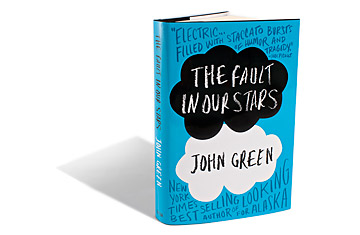
"The fault in our Stars" by John Green
(2 of 2)
Green's book is also a good example of why so many adult readers are turning to young-adult literature for the pleasures and consolations they used to get from conventional literary fiction. Its pacing is steady and brisk--it declines to linger lugubriously over every last observable detail--and its prose is sharp and clean and unshowy. It's funny, but it's not clever or overly impressed with itself. Above all, The Fault in Our Stars is fearless in the face of powerful, uncomplicated, unironized emotion, which is a very different thing from sentimentality. (It has been years since this jaded critic has shed tears over a novel, but I will cop to crying over this one.) While the prevailing trend in young-adult novels is toward supernatural romance and dystopian science fiction, Green dispenses with magic and with our dismal totalitarian future. He doesn't need them. For his purposes, love is magic, and the present is dystopian enough as it is.