

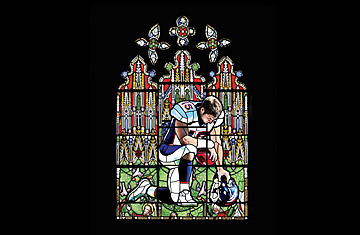
Doing the Tebow
(3 of 3)
This cultural Passion play of red-state piety and blue-state scorn is at once familiar and dispiriting. If Christians like Tebow are going to bear witness so publicly, then they ought not to be surprised when they are talked about in ways that require them to turn the other cheek. To insist that criticism of Tebow--even vulgar criticism--is evidence that American culture is hostile to Christianity is wrongheaded. At the same time, secularists who take shots at believers need to remember that the American tradition of religious liberty protects those who profess a faith as well as those who do not. I sometimes wonder whether we are the new Greeks and Trojans, perpetuating a long war more out of habit than necessity.
Jesus never played football and is not known to have ever worked out. (He didn't even swim, preferring to walk on water.) The perennial appeal of sports to deeply believing Christians, though, is undeniable. Part of the reason for this affinity may lie in the sense of drama that religion and sports share. For athletes, life is to be lived before an audience, according to precise rules and prescribed ritual. The rush of performance--especially of a victorious performance--is thrilling and transporting in the way religious feeling can be, taking the believer-athlete out of the ordinary world to a different, higher plane.
A favorite verse of Tebow's will serve him well in the brutal world of football: "Forgetting what lies behind and reaching forward to what lies ahead," writes St. Paul, "I press on toward the goal for the prize of the upward call of Christ Jesus." Whenever and however the Broncos' postseason ends, their young quarterback has already given us a glimpse of what lies ahead for Evangelical Christianity and for America.